CONURBIA ES Support the game
New: the first trailer Zombie survival · PC · In development

Conurbia

Your character can die. Your world won't.

A zombie survival game set in the conurbano, the sprawling suburbs of Buenos Aires, made independently in Argentina. The prototype is now playable from start to finish; I'm building the first neighborhood and looking for players who want to follow it from day one.

In-development gameplay, recorded as is.

Scroll
Trailer · November 2026

This is how it plays today

One minute of the neighborhood as it is right now: heading out to scavenge, fighting when there's no other way, and patching yourself up with whatever you have. It's in-development gameplay, recorded as is. On-screen text is in Spanish.

Contains violence and blood. This is a game for adults.

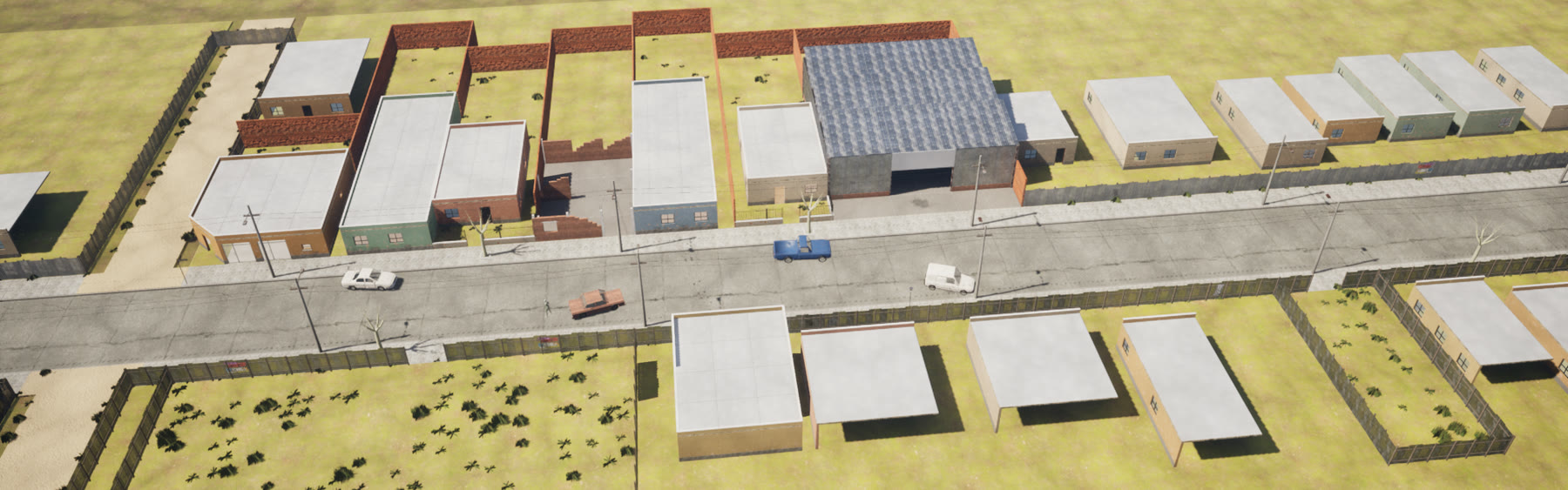
Aerial view of the first neighborhood under construction: a paved street with low houses, a corner store, a tin-roofed garage, abandoned cars and an empty lot
Under construction

Now: the first neighborhood

The prototype is complete. The neighborhood is now four blocks of the conurbano, with houses you can enter, shops, a garage, the railway and many more zombies.

In-engine capture, in daylight with placeholder art, from when it was a single street. The new images are further down, under "What's new".

  • 4city blocks
  • 68houses and shops to enter
  • 900pieces of furniture to search
  • 20–50zombies, the goal

A block you'd recognize

A cracked asphalt street, a dirt alley with ditches, brick walls, iron gates, an empty lot and a bus stop. Every house is different: long shotgun-style houses, boxy ones, one never finished. All made up, but drawn from the blocks I know.

  1. Layout and gray blocksDone
  2. Street and facade artDone
  3. Interiors to lootDone
  4. Realistic characters, weapons and bloodDone
  5. Four blocks and the nightDone
  6. Fuller interiors and more varied zombiesIn progress
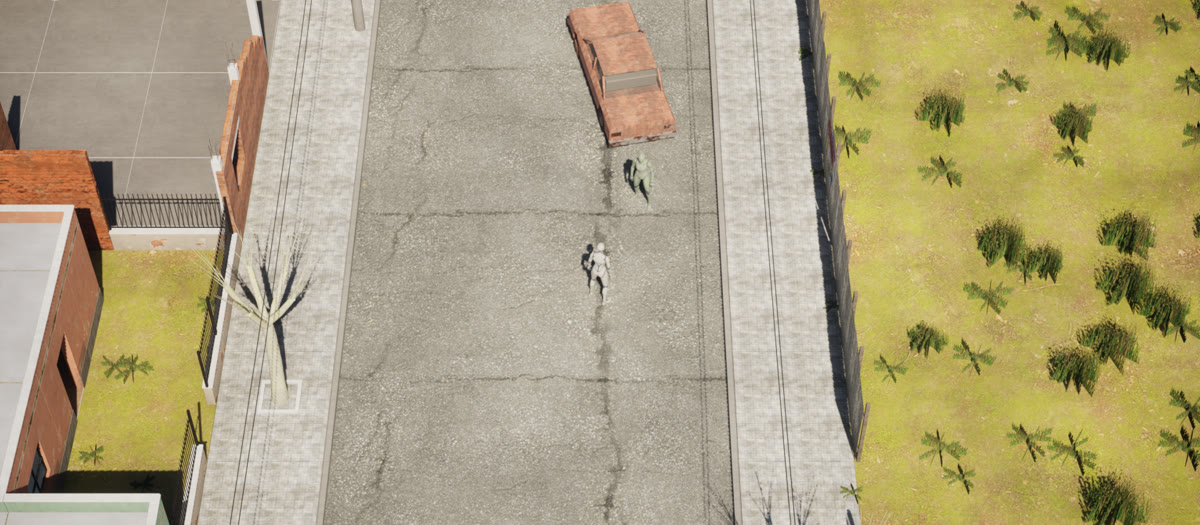
A zombie walks next to an abandoned car on the neighborhood street
An abandoned car and a neighbor who isn't one anymore.
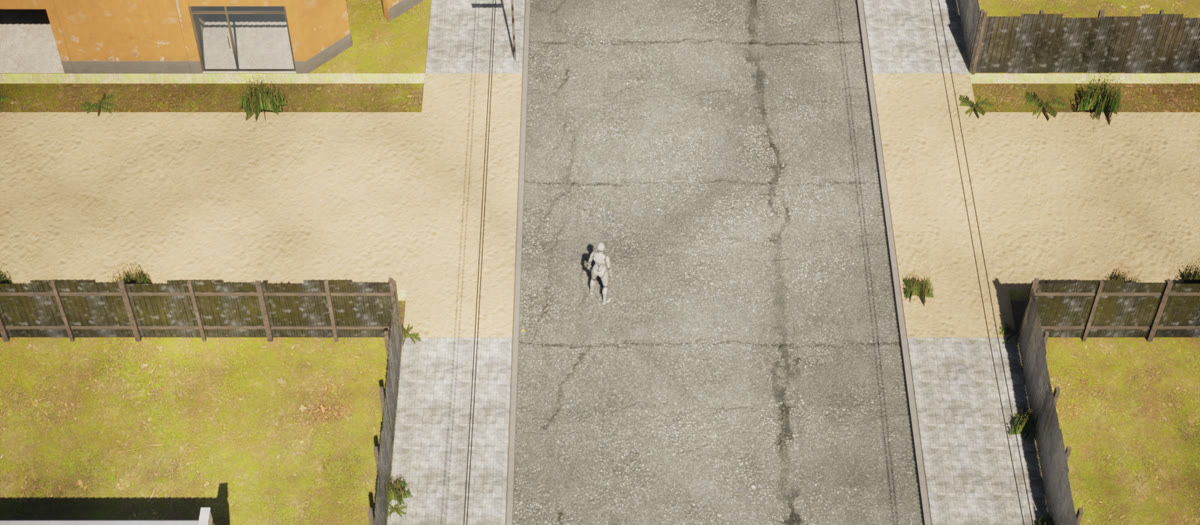
The corner by the store, with the sidewalk and the dirt alley crossing
The corner by the store.
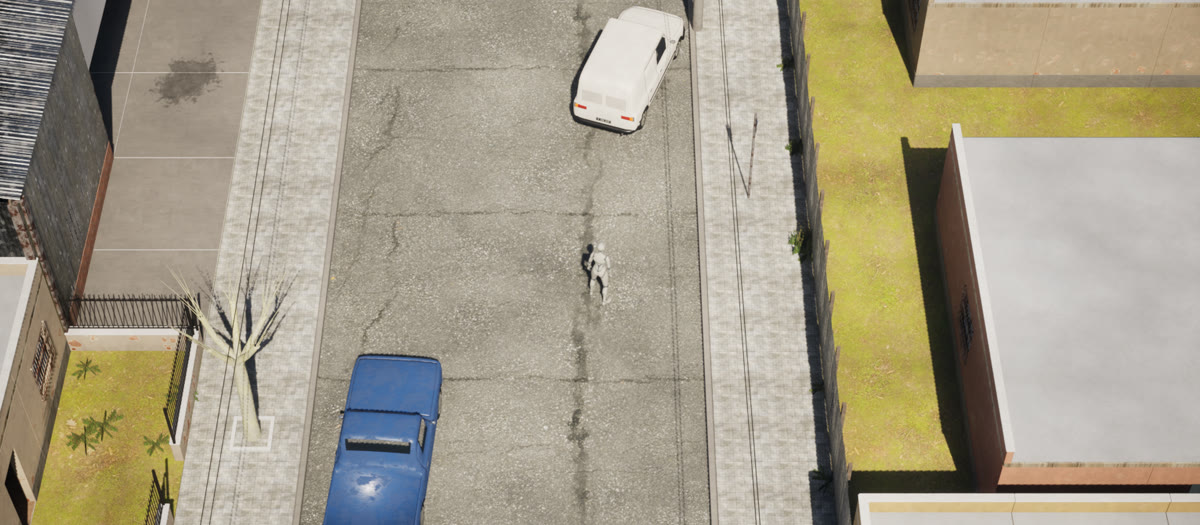
A street with a parked white van and a blue car
The van and the bus stop.
The game

Dying changes who you play, not the world

A sandbox zombie survival game with an overhead camera and a world that persists. A real-feeling Buenos Aires neighborhood: barred windows, roll-down shutters, shared brick walls, tangled power lines and corner stores.

Days later you return to the same house and see your previous character walking around, wearing the backpack you packed yourself.

When your survivor dies, the world goes on. The body stays where it fell and, in time, it may get back up with all its gear. Your next survivor starts somewhere else in the neighborhood and might just run into it. No cutscenes: the game creates that moment on its own.

Heading out

Explore→Break in→Loot→Make noise→Fight or flee

Coming back

Injury→Death→New survivor→Reunion
01

One world, one save

It saves automatically and there are no parallel saves. What you break stays broken; what you leave behind stays there.

02

Noise gives you away

Every action can be heard from a certain distance. Walls and doors muffle sound. You learn to move quietly.

Crouching10 ft
Walking26 ft
Running66 ft
Breaking a window82 ft
03

Your body matters

Injuries by body part, bleeding and infection that show up as symptoms, not percentages.

04

The story is uncovered

Nobody tells it to you. You piece it together from traces, rumors and accounts that don't add up.

The world

Nobody knows where it came from.
Everyone knows what came after.

This is what anyone in the neighborhood can tell you. The rest, you'll have to find out for yourself.

Day 0 · The Fall

First, it was a fever

There were hospital admissions, doctors asking for calm and a word everyone knew from the news: Ebola. For a few days it looked like just more bad news. Then, in a morgue, a body got up.

  1. The first patients are admitted. Doctors talk about a hemorrhagic fever and ask for calm.

  2. In a morgue, the first reanimation is documented. For days, nobody believes it.

  3. An international health emergency is declared.

  4. The world powers blame each other. Nobody takes responsibility.

  5. The first Safe Zones open.

  6. A bite is no longer needed: everyone still alive carries it inside.

  7. The Safe Zones collapse.

  8. Containment bombings over the cities.

  9. The last official statement. After that, the government never speaks again.
The rule nobody chose

Everyone comes back

It doesn't matter what kills you: an infected wound, fever, cold, hunger or old age. A few hours later, sometimes two and sometimes twelve, the body gets up. It isn't the person. It walks, listens and searches, nothing more.

Those who know what to look for can spot the signs in the last hour. That's why, around here, nobody leaves the dead alone.

Rumors

What people say around here

  • “A bite turns you.”
  • “There are still people in the Safe Zones.”
  • “If you burn it whole, it won't come back.”

The truth happened only once. Every survivor tells a different story, and some of them don't match at all.

Neighborhood legends

Stories people told long before

Every neighborhood has its own. Nobody knows how much of them is true, but the traces are still there for anyone willing to go and look.

01

The Streetlight on the Bend

On a sharp bend of the avenue there's a streetlight that flickers in a strange way. People say that if you see it flicker three times in a row as you pass, something bad will happen to you that week.

02

The Passenger on the 203

Even before the outbreak, drivers on the 203 bus line said that on the last ride of the night a passenger would sometimes board and ask to get off at a stop the company had removed years earlier.

03

The Kermesse Radio

A small community radio station that used to broadcast parish notices and music for church fairs keeps playing the same list of songs, over and over, on a lost frequency on the dial.

The years

The dead grow old too

The newly returned still move like people. Over the years they dry out, break down and wear away. The world of CONURBIA doesn't stand still: seasons pass, the utilities fail, and what is a threat today becomes something else tomorrow.

In the early years, the dead are the apocalypse. Decades later, death itself is.

  1. The FallThe first months. Everything that worked stops working.
  2. The First OnesThose who survived band together, close off blocks and build communities.
  3. The WearingWhatever was left on the shelves runs out. The Year of Hunger arrives.
  4. The DecayThe old dead are now the majority. The danger changes shape.
  5. The New WorldThose who never knew the before grow up.
Progress

The prototype, complete: one house you can play from start to finish

I show progress exactly as it is. These images come from the actual prototype: simple shapes and work-in-progress textures, no final art yet.

There's no demo to download yet. The internal playable prototype is now complete; next up is a small neighborhood you can play from start to finish.

  • Movement: walk, run and crouchCamera-relative, with tuned speeds.Working
  • Stamina and noiseAbout 15 seconds of sprinting; running can be heard 66 ft away.Working
  • Overhead cameraRotates freely while you hold the mouse wheel, zooms, and moves in closer when you step inside.Working
  • Test street and house260 ft of street and a 30 × 26 ft house with five rooms.Working
  • Fading roofsStep inside and the roof and upper walls disappear but still cast shadows: the interior stays dim, with light coming in through doors and windows.Working
  • Mouse aimingHold right-click and your character faces the cursor and slows down. Whatever you're aiming at is highlighted: a zombie in red, an item in a warm tone.Working
  • Looting: doors, furniture and itemsPress F to open doors, search furniture and pick things up. What you searched stays searched.Working
  • Weight-based inventoryPockets hold about 4 lb, plus a belt and a backpack that adds about 26 lb, each with its own space: drag something from one to another and it stays where you put it, if it fits.Working
  • Eating, drinking and dropping thingsIt takes time and gets interrupted if you move or get hurt.Working
  • New interfaceA full-screen inventory with your character shown live, all driven by the mouse: click, double-click, right-click menu and drag and drop. You set up the 1–4 quick bar yourself.In testing
  • Paper map and notesA printed map of the neighborhood, covered in fog that clears wherever you walk. Mark places in five colors and keep the notes you find around the neighborhood. On M or Tab.In testing
  • The first zombieIt sees you at about 40 ft and hears you based on distance and walls. Shut a door on it and it bangs on it until it breaks through.Working
  • World clockThe day moves on by itself: one in-game hour lasts 10 real minutes, and the time is saved.Working
  • Hunger, thirst and fatigueYour body has needs. Go a few hours without water and your character starts getting thirsty.Working
  • Melee combatNine weapons, from a knife to a bat, short and long. Zombies take damage by body part: a hit to the head isn't the same as a hit to the legs. Every weapon wears out and eventually breaks.Working
  • BloodIt splatters the floor and walls with every hit, pools when a zombie goes down, and stains your screen when you get hurt.Working
  • Realistic charactersThe protagonist and the zombies, built with MetaHuman. There are three different zombies so far; clothing and skin are still being tuned.In progress
  • Wounds, bleeding and infectionBlunt hits, scratches and bites. An unbandaged wound bleeds; a bandaged but dirty one gets infected and worsens over the days.Working
  • Health panelPress H to see each wound and how it's doing, described in words, with no numbers or percentages.Working
  • Dying and coming backYour body stays in the world with everything you were carrying, and you go on as another survivor in the same world. Take too long to go back and you'll run into your previous character.Working
  • Saving and coming backSaves on its own every minute and when you quit. Come back and everything is as you left it: your wounds, the house, the zombies and the dead.Working
  • Menu and namesContinue or start a new world. Every survivor has their own name: type one in or get a random one.Working
  • The first neighborhoodStreets, houses you can enter, a corner store and a garage. It still needs to fill up with zombies.In progress

What's new: houses with a story, and firearms

Real in-engine captures. Houses are now built one by one, by hand, each around the family that lived there. And firearms are here: they get the job done, but they can be heard from far away.

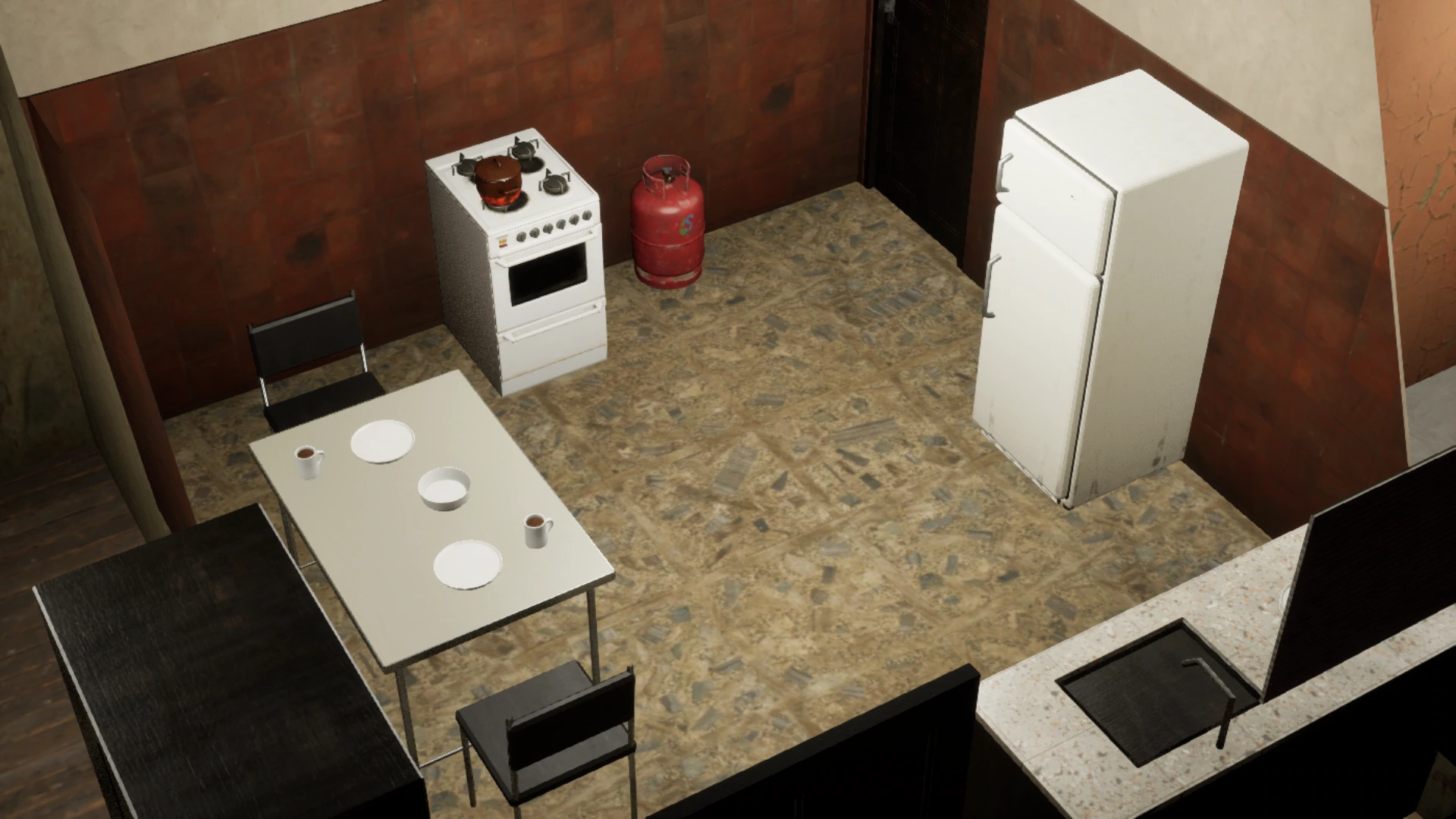
A suburban Buenos Aires kitchen seen from above: a white enamel stove with a kettle, a red gas cylinder, a fridge, a table with plates and cups, and a patterned tile floor
Elvira's kitchen, just as she left it.
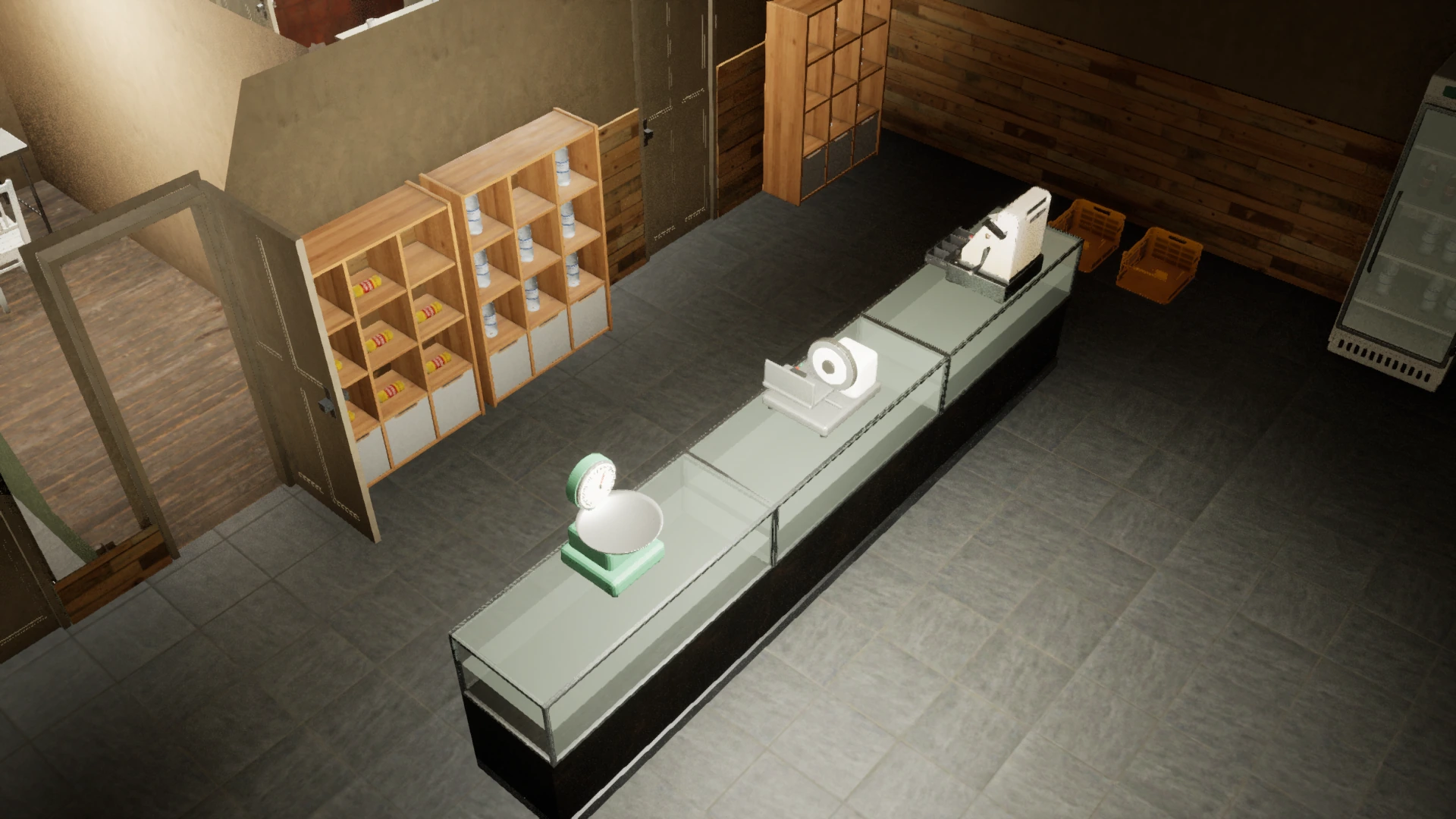
A corner grocery store seen from above: a glass counter with a scale and a meat slicer, wooden shelves with goods and a display fridge
The corner store, with its counter and its scale.
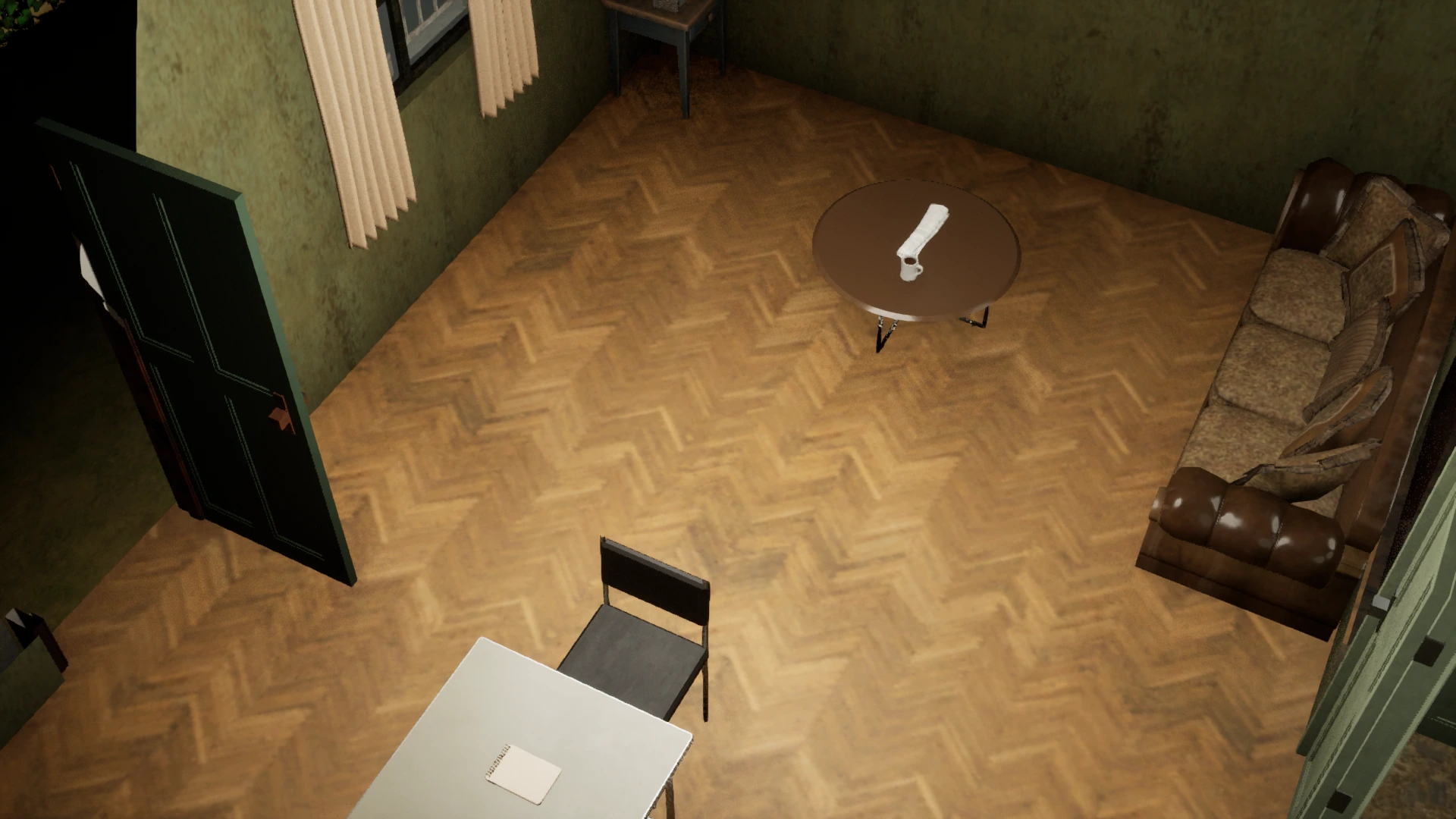
A living room with herringbone parquet, a worn leather sofa, a round coffee table, curtains and a green door
Parquet, curtains and a worn-out sofa.
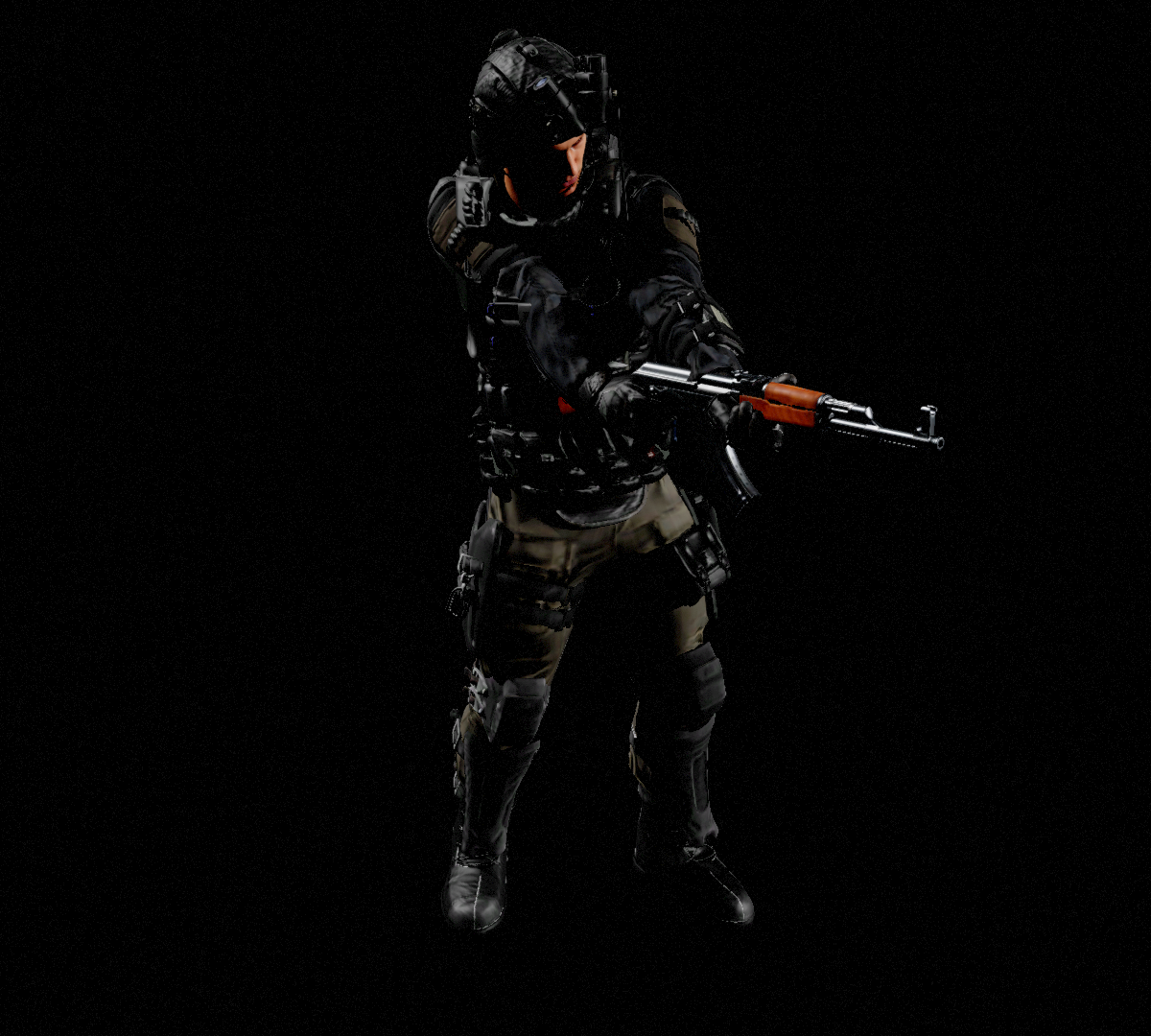
The survivor in tactical gear holding a wood-and-metal rifle against a black background
A rifle. Every shot is heard across half the neighborhood.

Recently: four blocks and the night

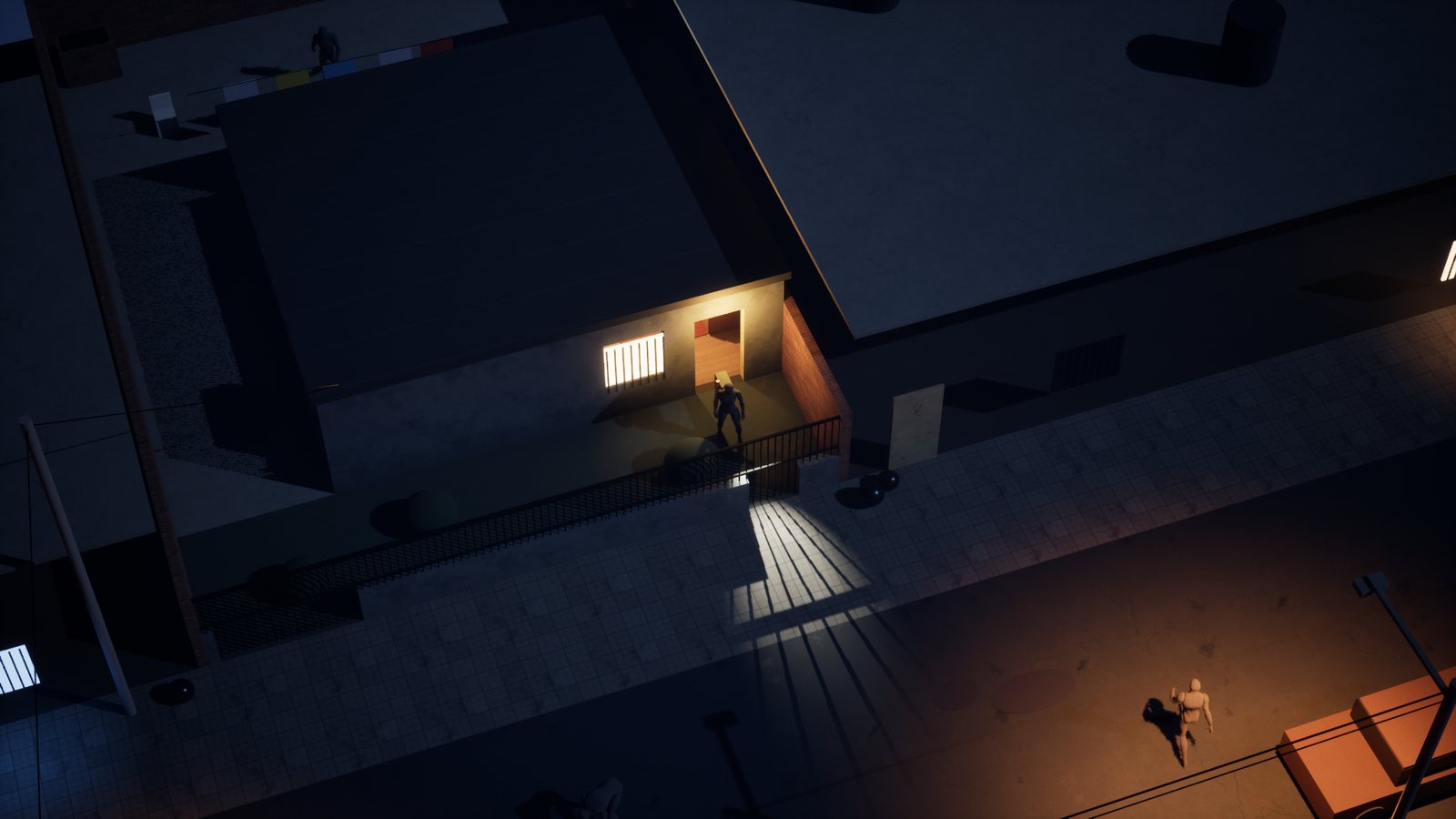
Real in-engine screenshots with placeholder art. The neighborhood grew to four city blocks with houses you can enter, and there's real night now: once the power goes out, darkness works against everyone.

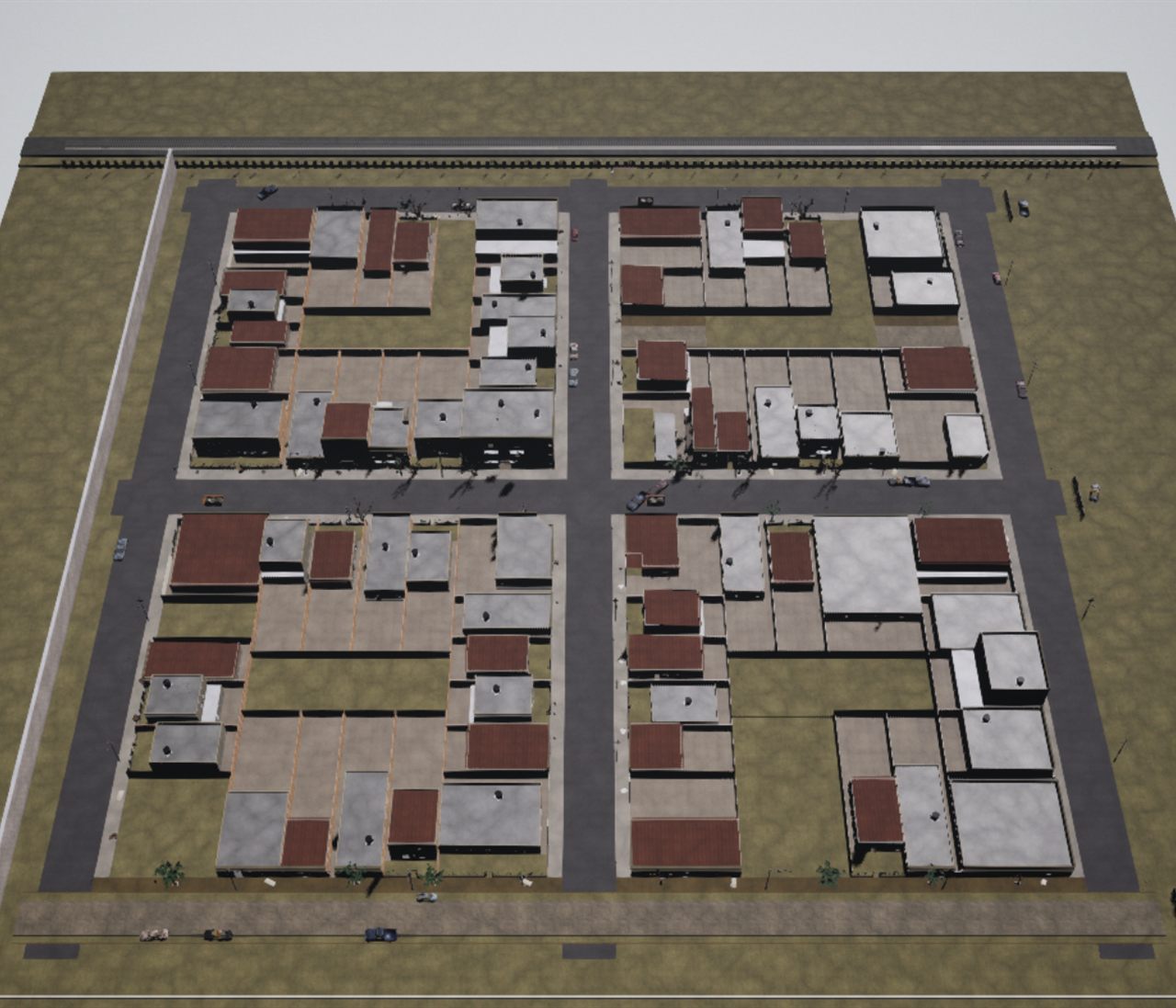
Aerial view of the four-block neighborhood, with crossing streets, low houses with red and gray roofs, a railway and a fence around it
The four blocks from above.
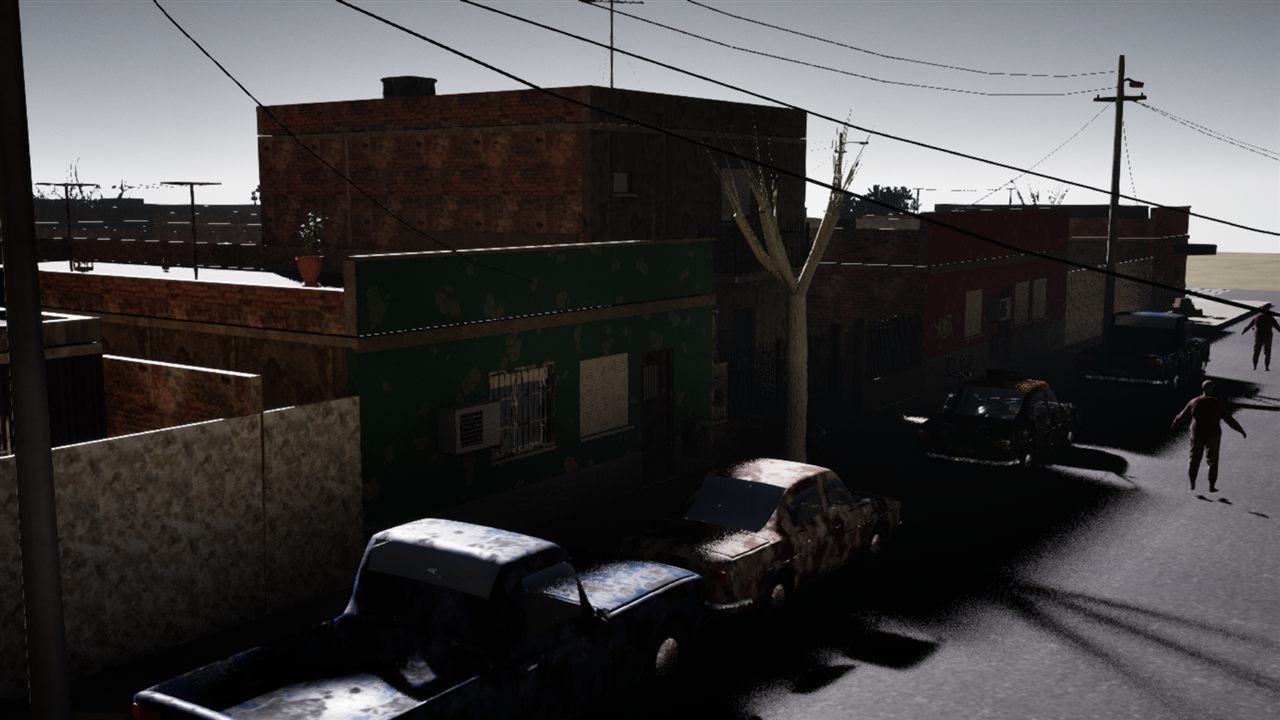
A neighborhood street at dusk, with brick and sheet-metal facades, power lines, old parked cars and a zombie in the distance
Facades, power lines and cars nobody will drive again.
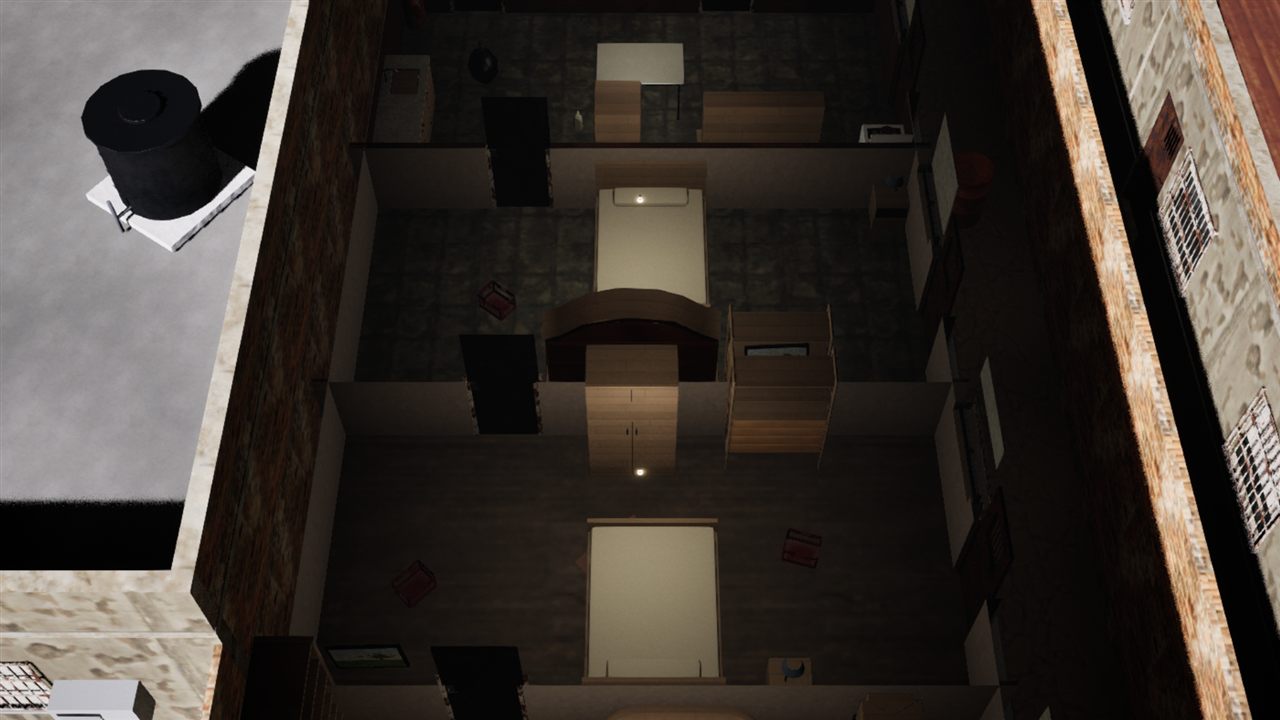
A house seen from above with its walls cut at half height, showing bedrooms, beds and furniture
Inside, the house looks like a scale model.
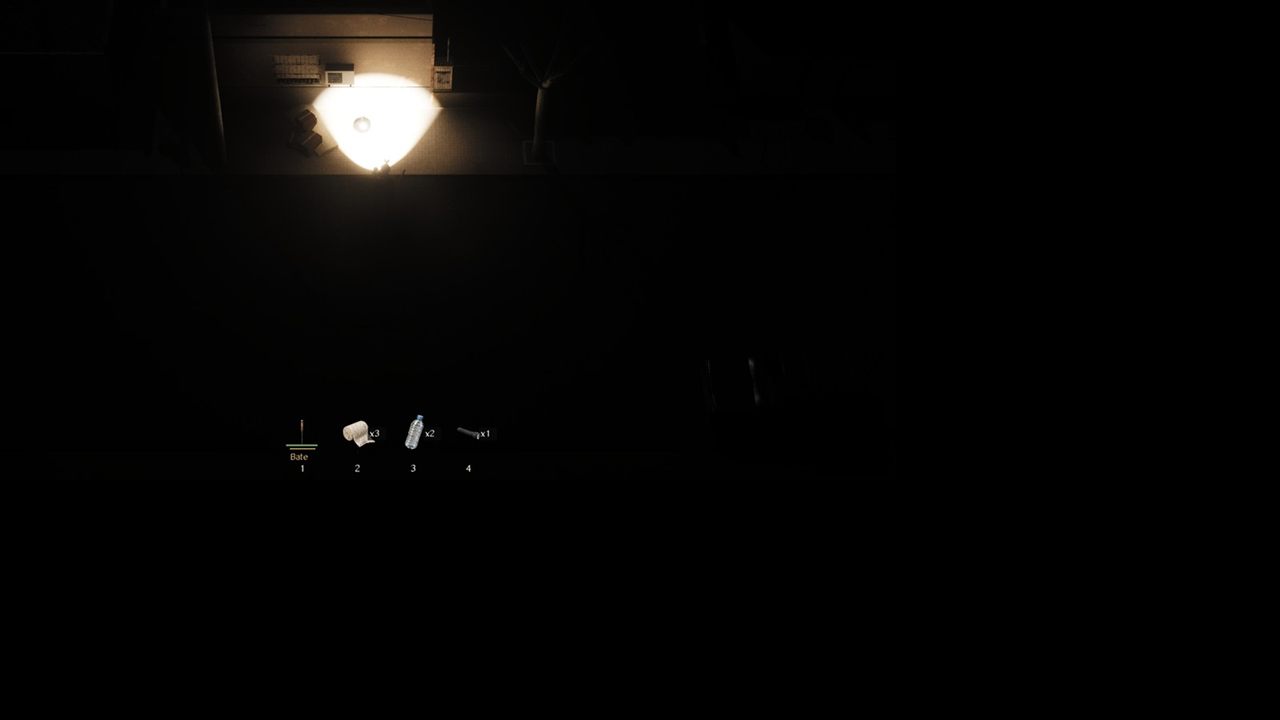
An almost pitch-black street at night, lit only by a flashlight beam
With the power out, your flashlight is all you have.

Before: faces, blood and weapons

Real in-engine screenshots from the neighborhood. The protagonist and the zombies are now realistic characters built with MetaHuman; clothing, zombie skin and expressions are still being tuned.

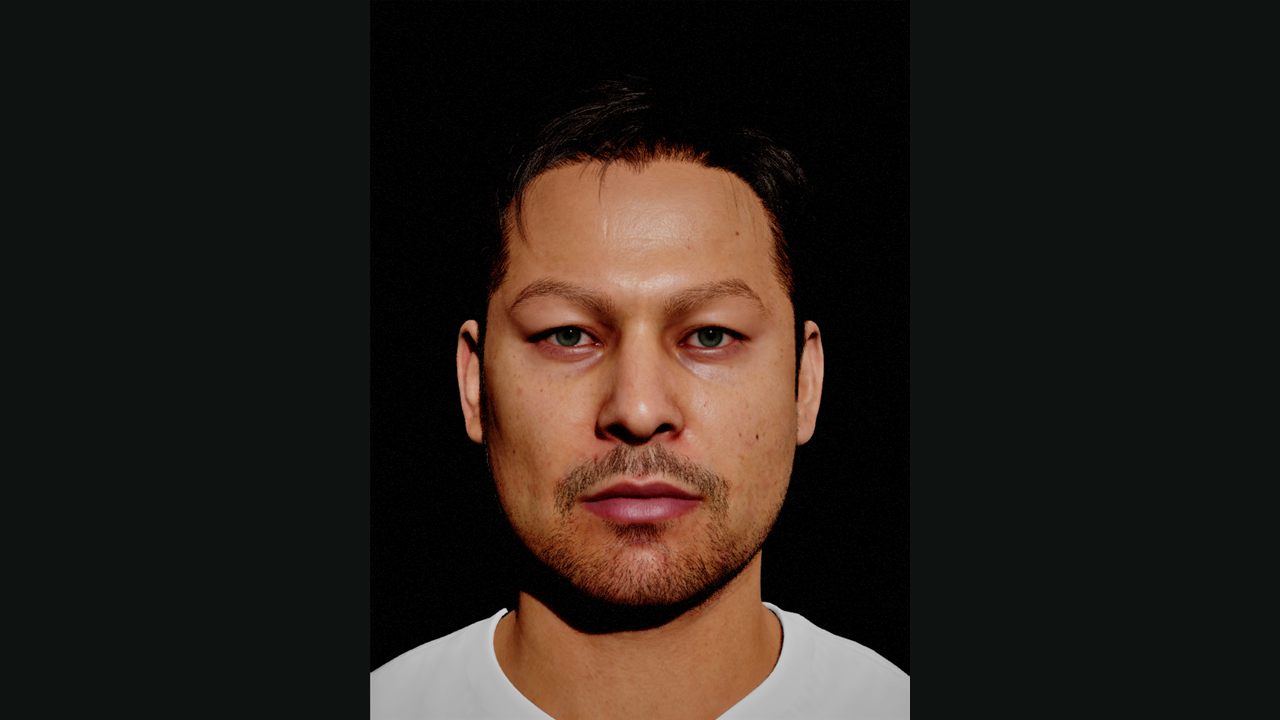
Close-up of the protagonist's face, a man with short dark hair and a short beard
The protagonist, built from a photo of me.
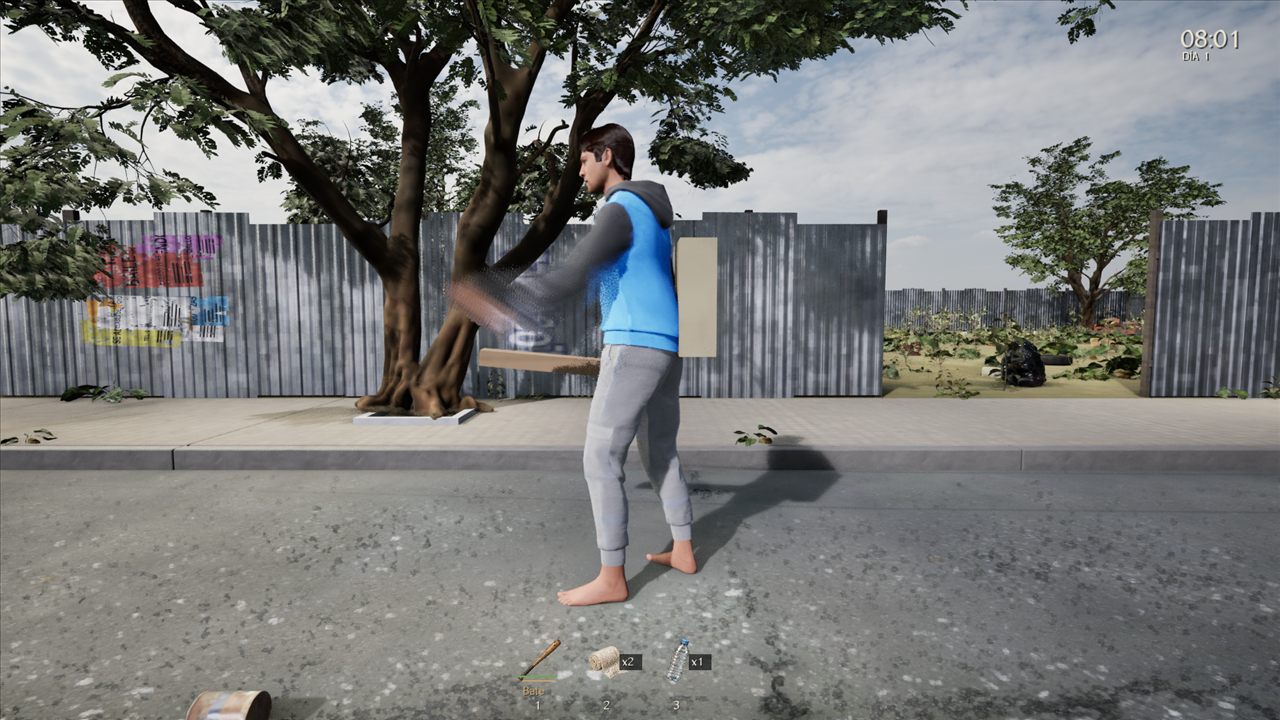
The protagonist in a hoodie and cargo pants, seen from the side on the neighborhood street
Now walking the neighborhood in a hoodie and cargos.
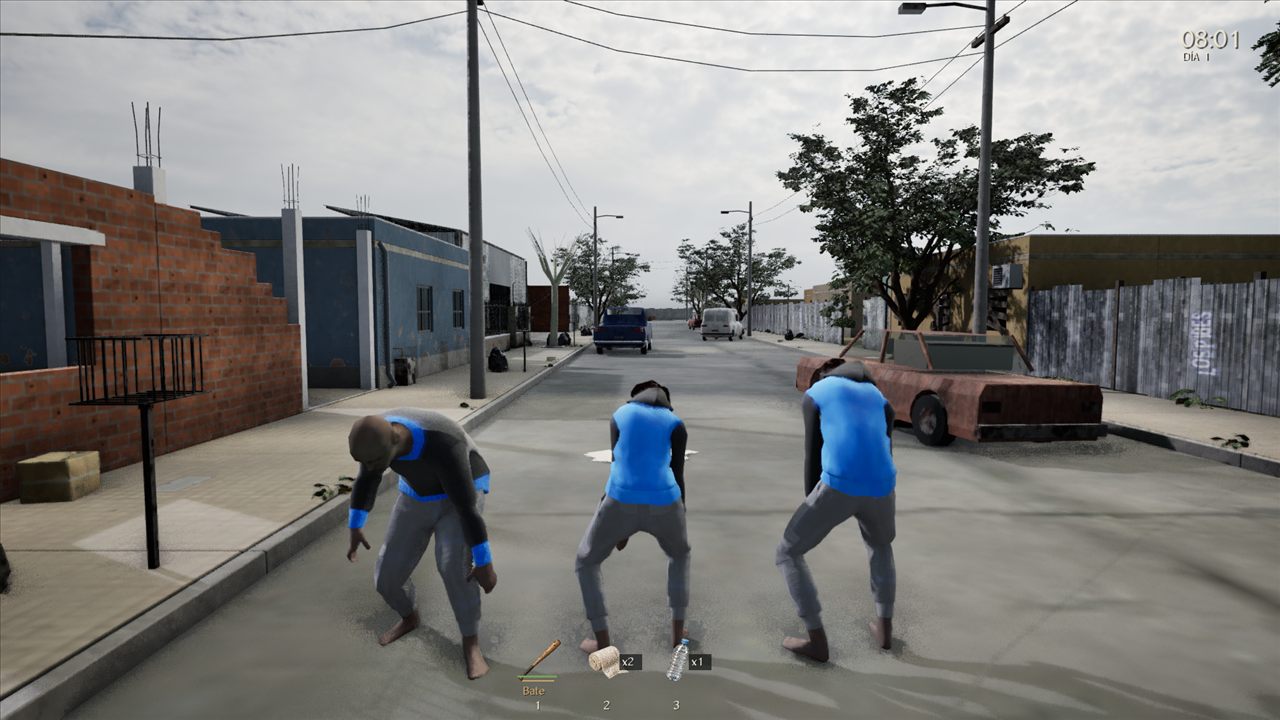
Three zombies of different builds, hunched over in the middle of the street
The first three neighbors who aren't neighbors anymore.
A dead zombie on the asphalt in a pool of blood, with the protagonist standing to one side
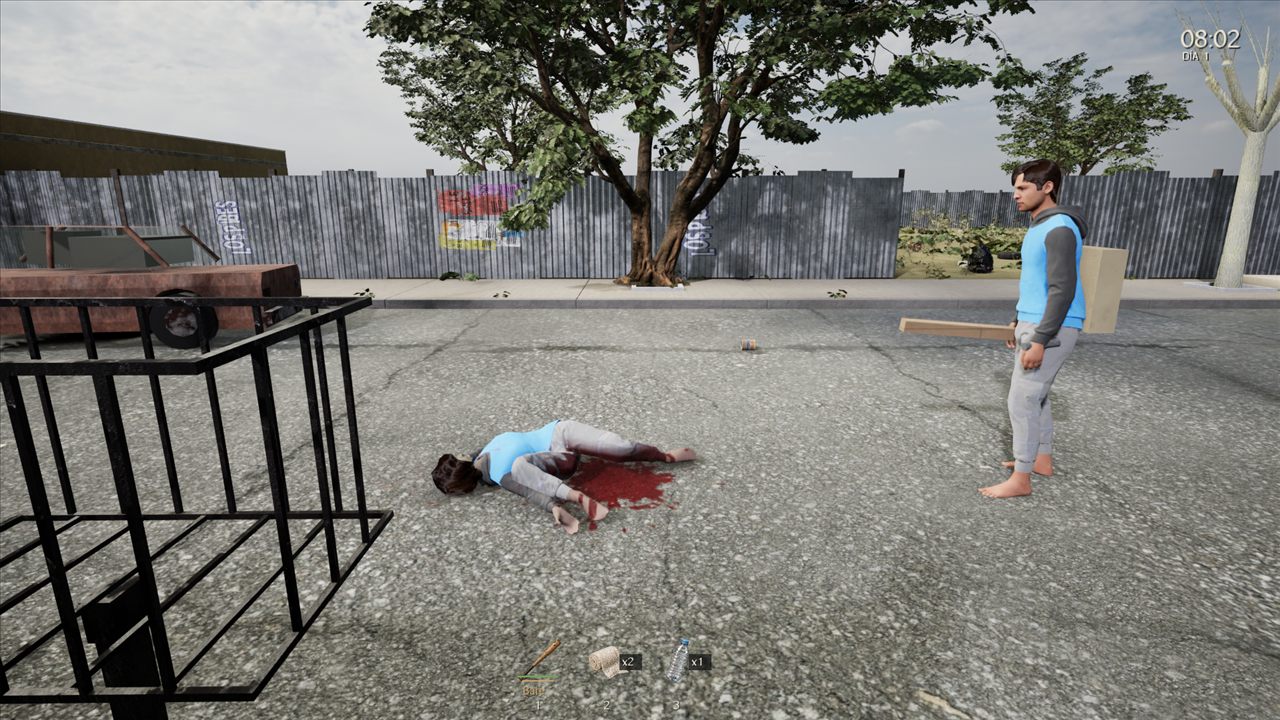
When they fall, the blood stays on the asphalt.
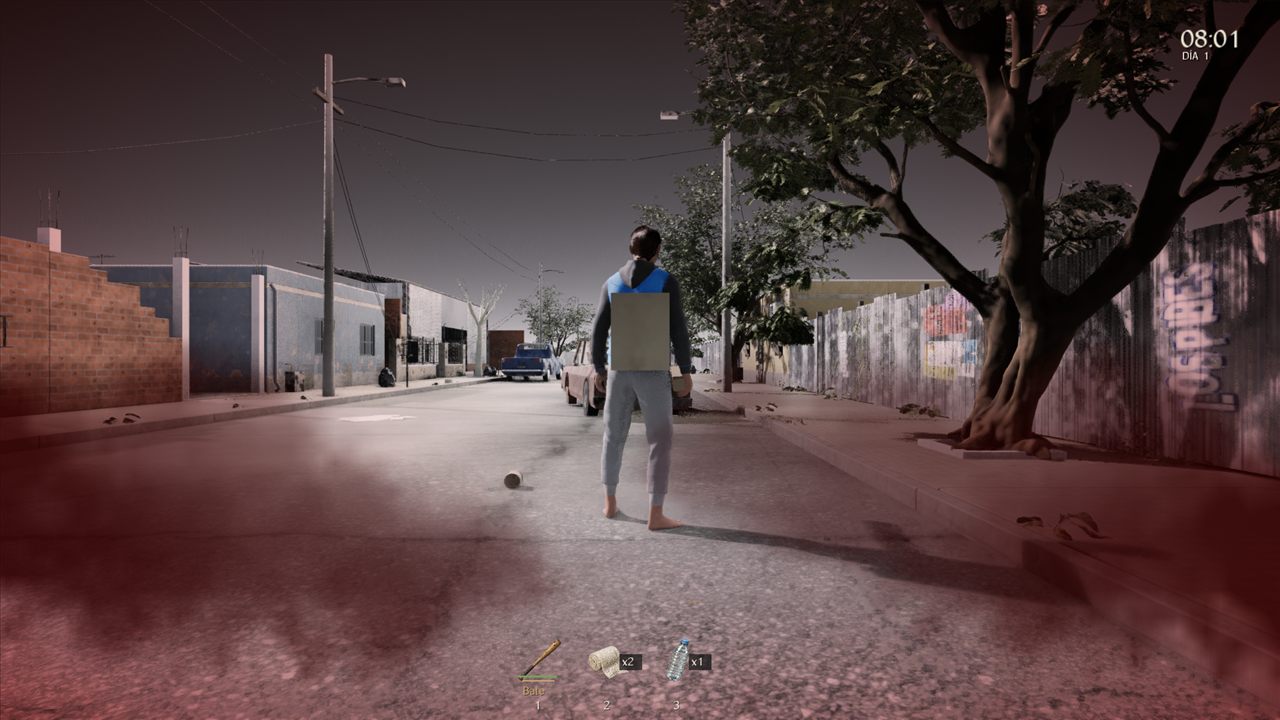
The screen smeared with blood around the edges right after a bite
Just bitten: blood splashes the screen.
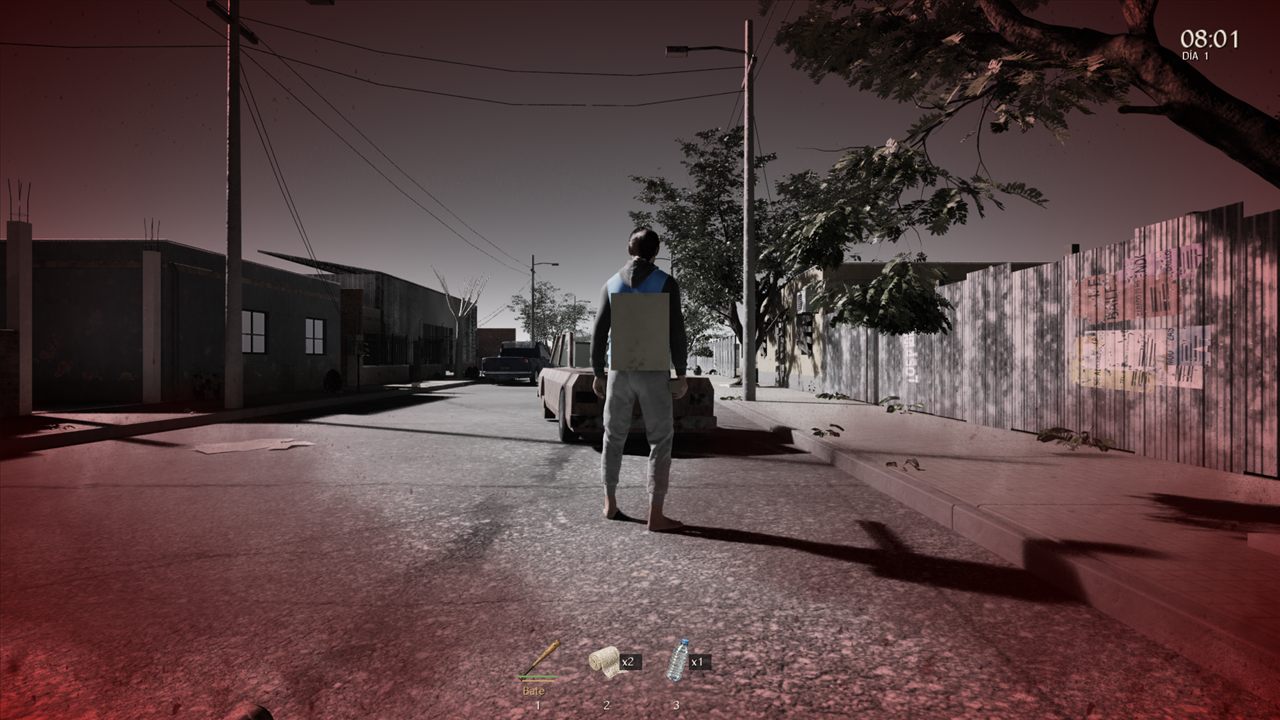
The street almost drained of color with a red border, seen with little blood left in the body
Low on blood, the world loses its color.
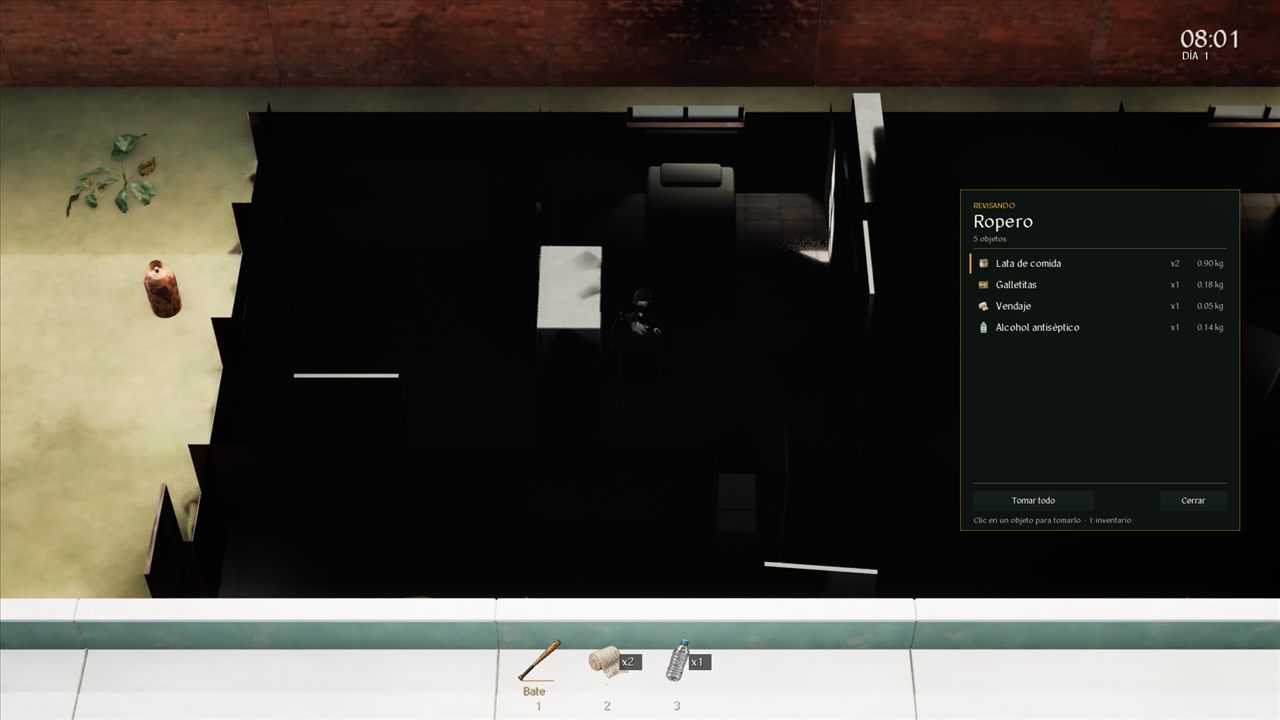
A window listing what's inside a wardrobe: cans, crackers, a bandage and alcohol, with their weight
Quick looting: the furniture and what's inside.
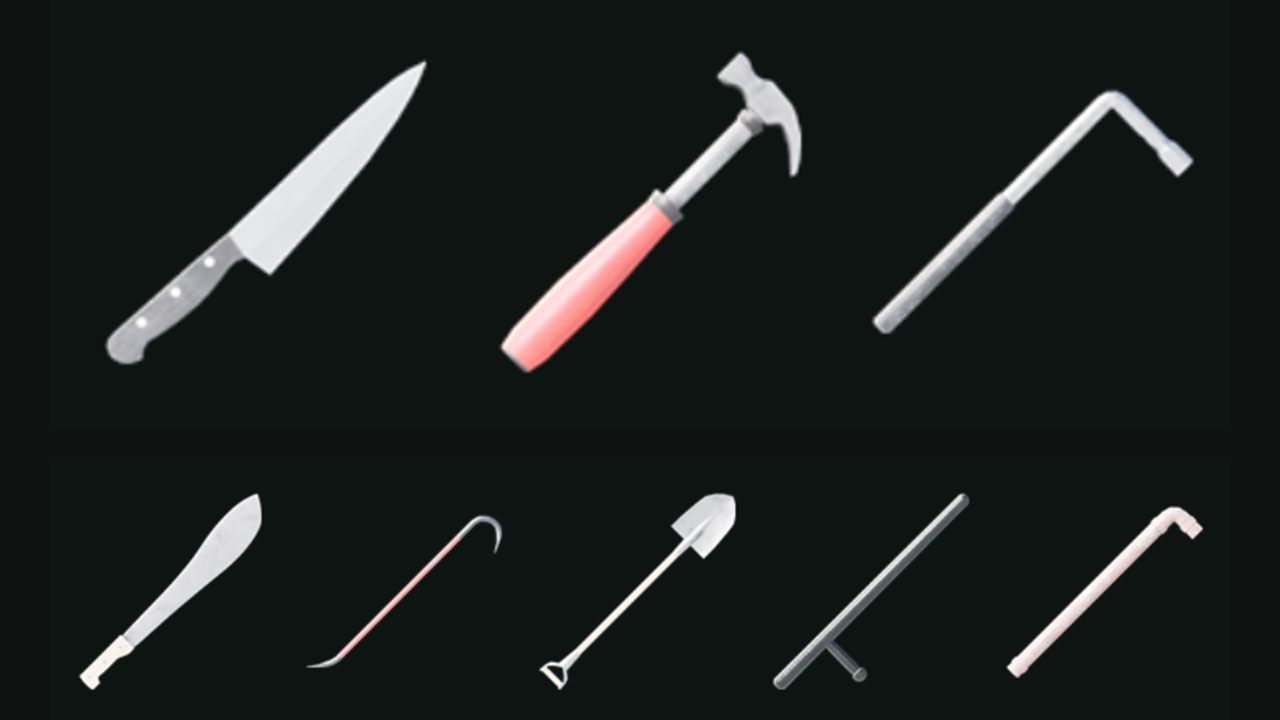
Icons of the new weapons: knife, hammer, lug wrench, machete, crowbar, shovel, baton and pipe
Eight new weapons, each one wearing out.

The new interface: inventory and map

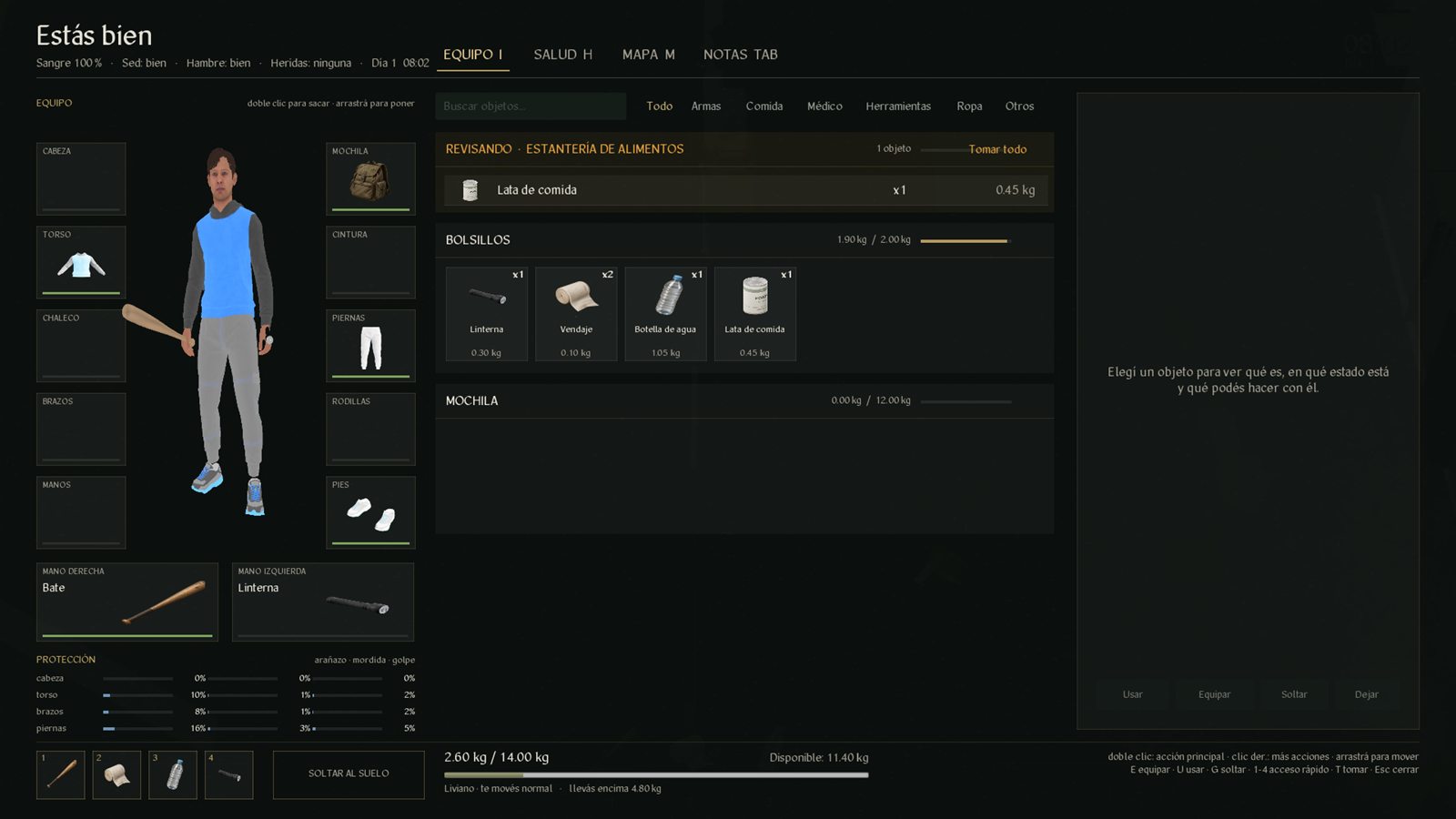
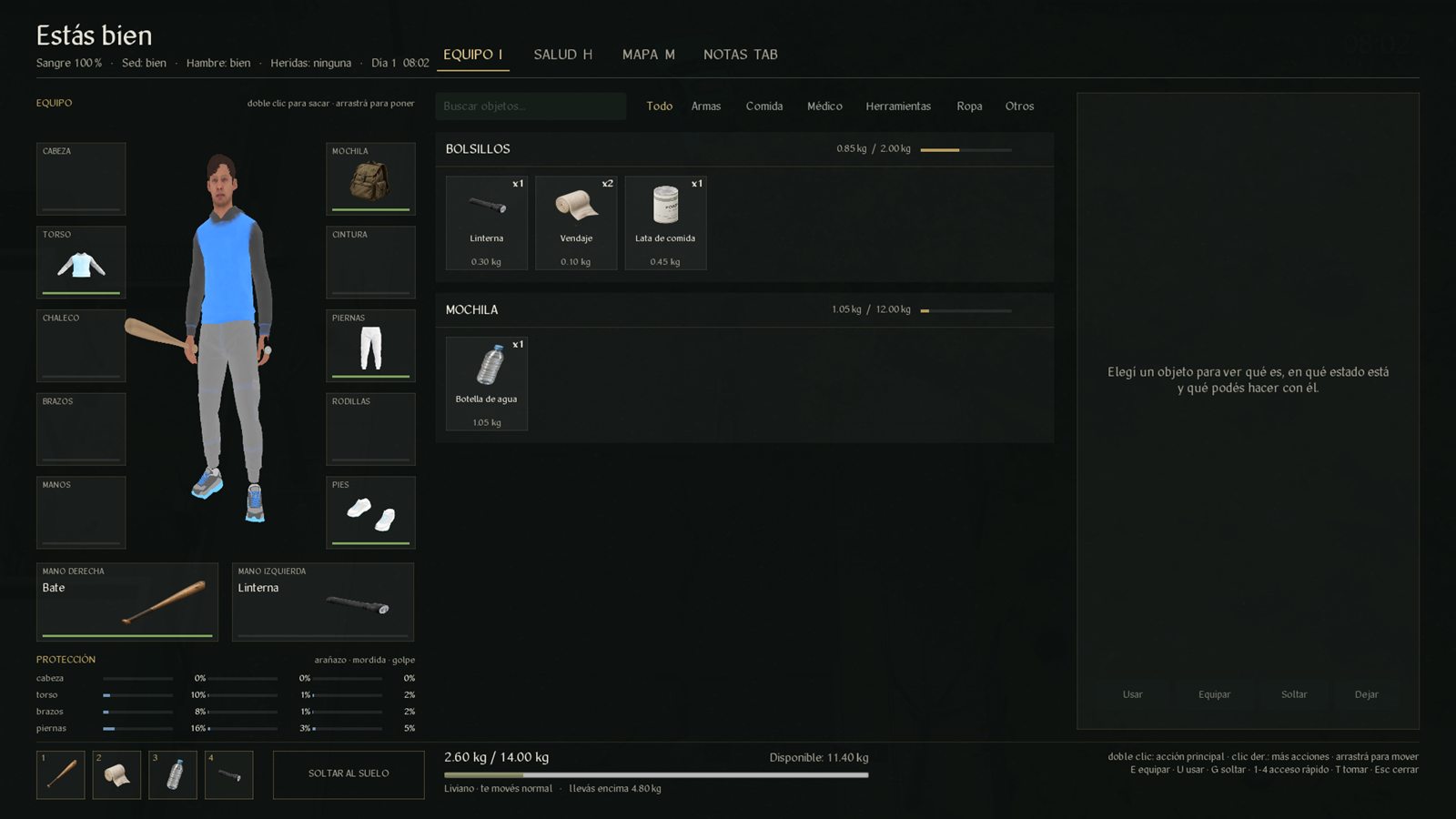
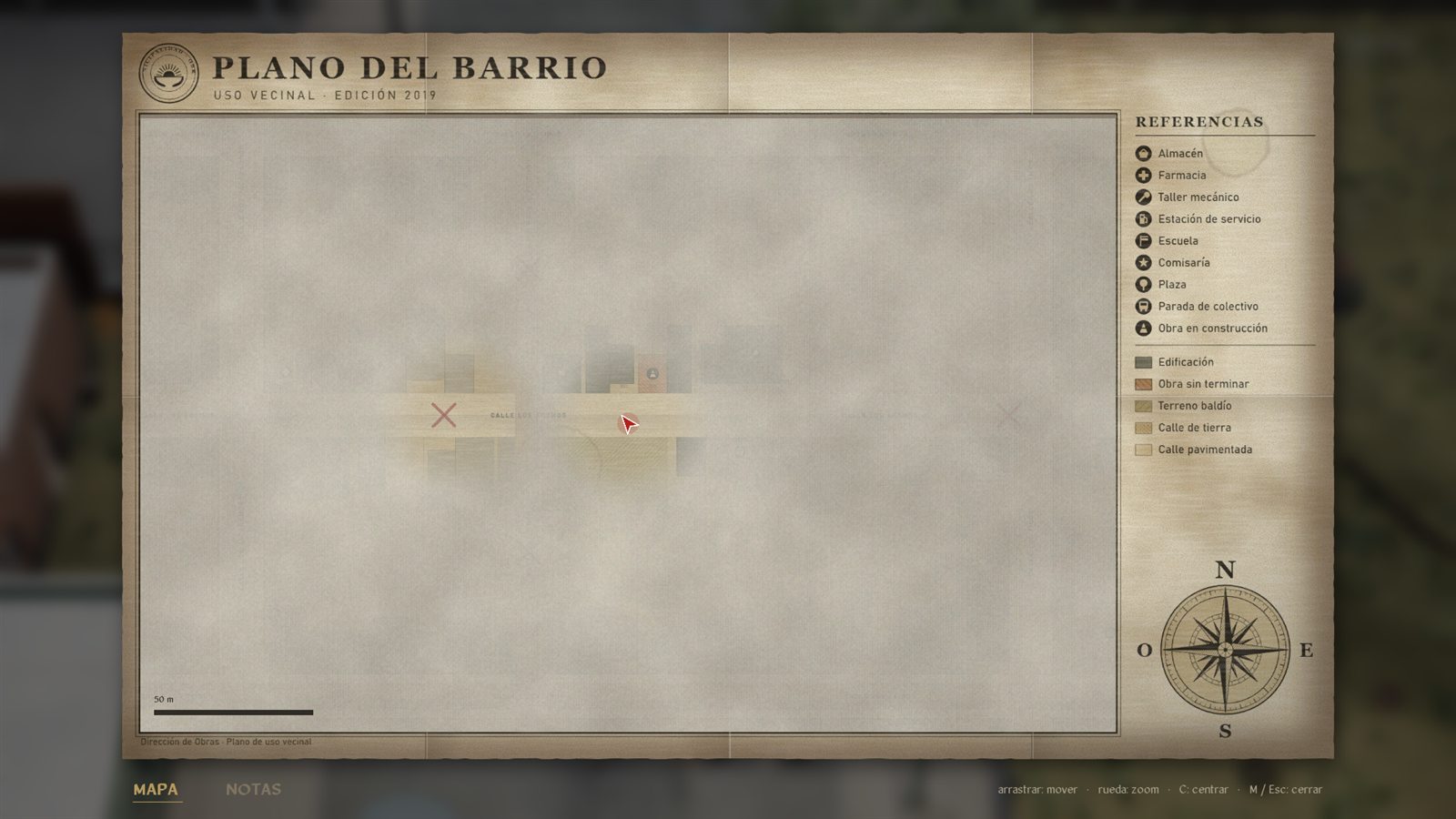
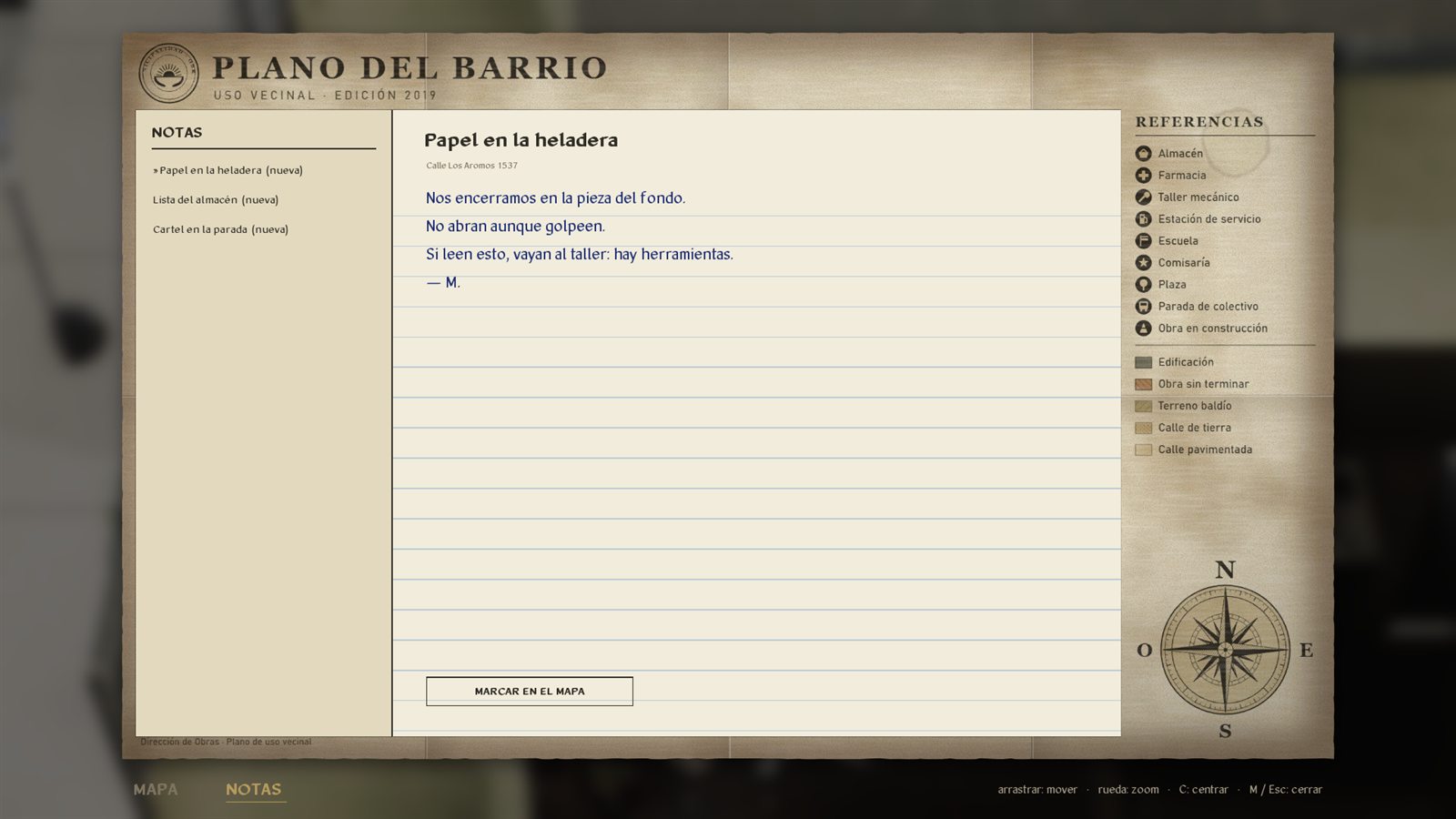
Real screenshots from the game. I rebuilt the interface so it feels more grounded and works with the mouse. I'm still testing it, so it may change.

Full-screen inventory: the protagonist and his gear on the left, a searched cupboard holding a can of food in the middle and the pockets below
Searching furniture: what's inside, right next to your stuff.
Inventory with the pockets almost full and a water bottle stored in the backpack
Pockets and backpack: everything stays where you put it.
Printed paper map of the neighborhood, covered in fog except for the street already walked, with a legend and a compass rose
The neighborhood map: the fog clears wherever you walk.
The map's notes tab showing a handwritten note found in a house
The notes you pick up are kept in the map.

How it used to look

The prototype's first interface, for comparison. It's no longer in the game.

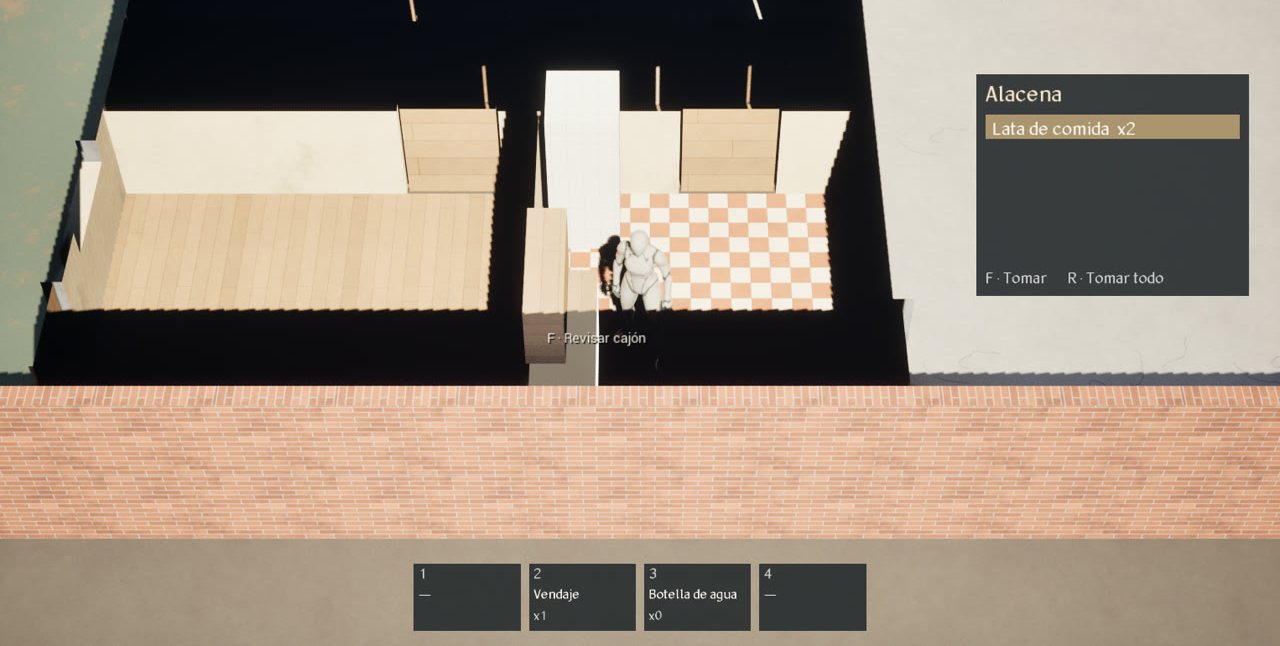
Looting panel for a kitchen cupboard holding a can of food, next to the character; below, the 1 to 4 quick bar
Looting: F takes one item, R takes everything.
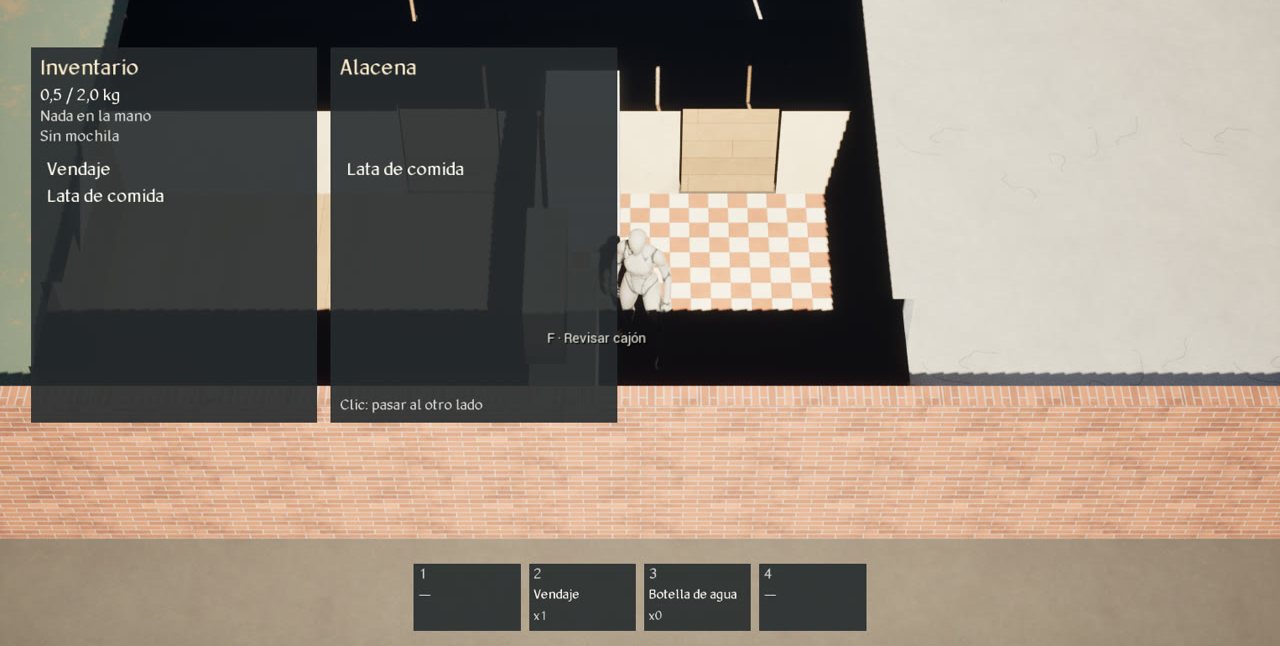
Inventory showing 0.5 of 2 kilos used, next to the contents of the open cupboard
The inventory, next to the open container.
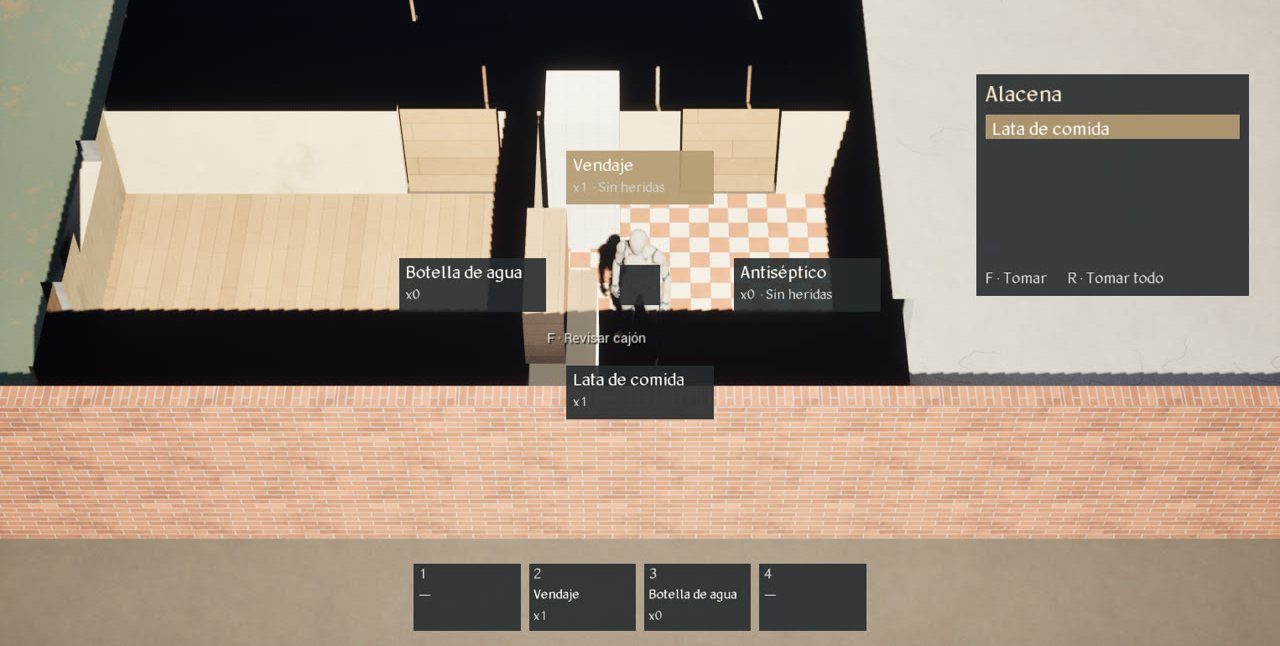
Radial menu around the character with a bandage, antiseptic, a water bottle and a can of food
The radial menu, on Tab.
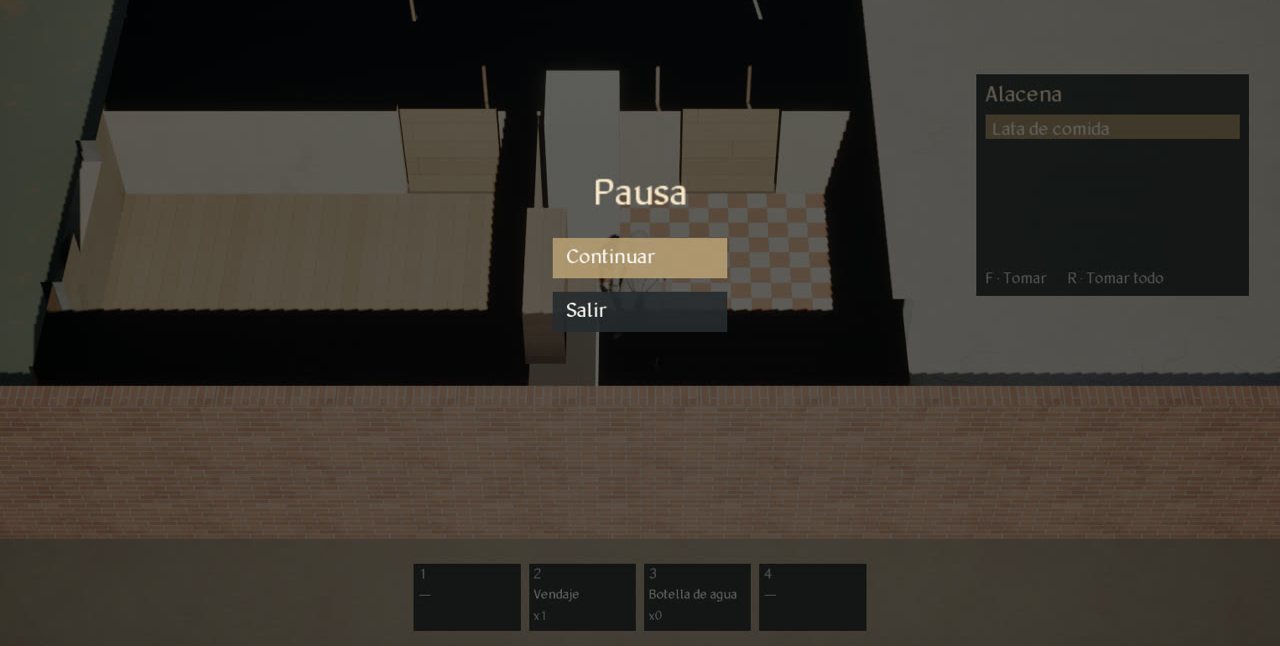
Pause menu with Continue and Quit options
The pause menu.

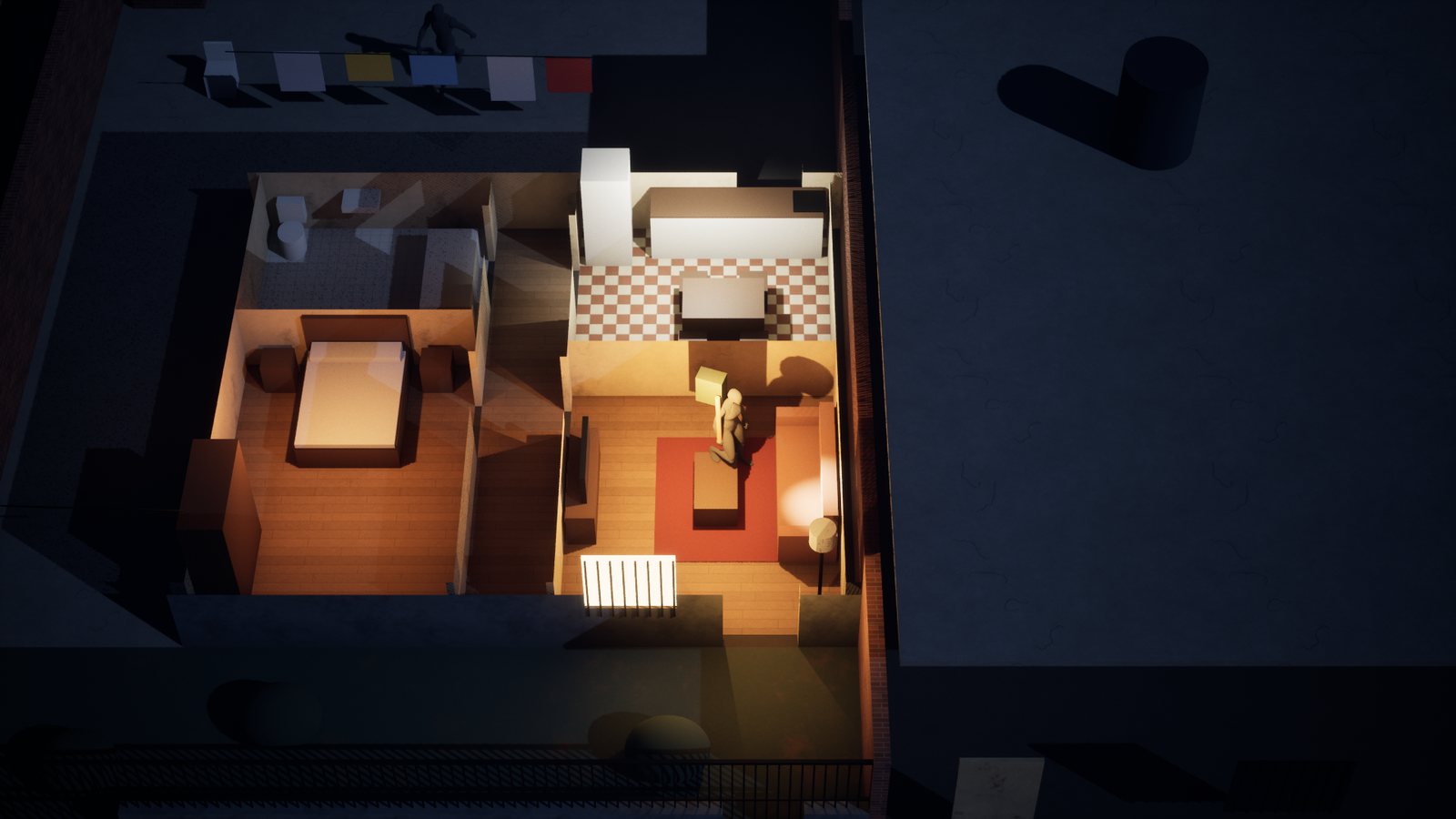
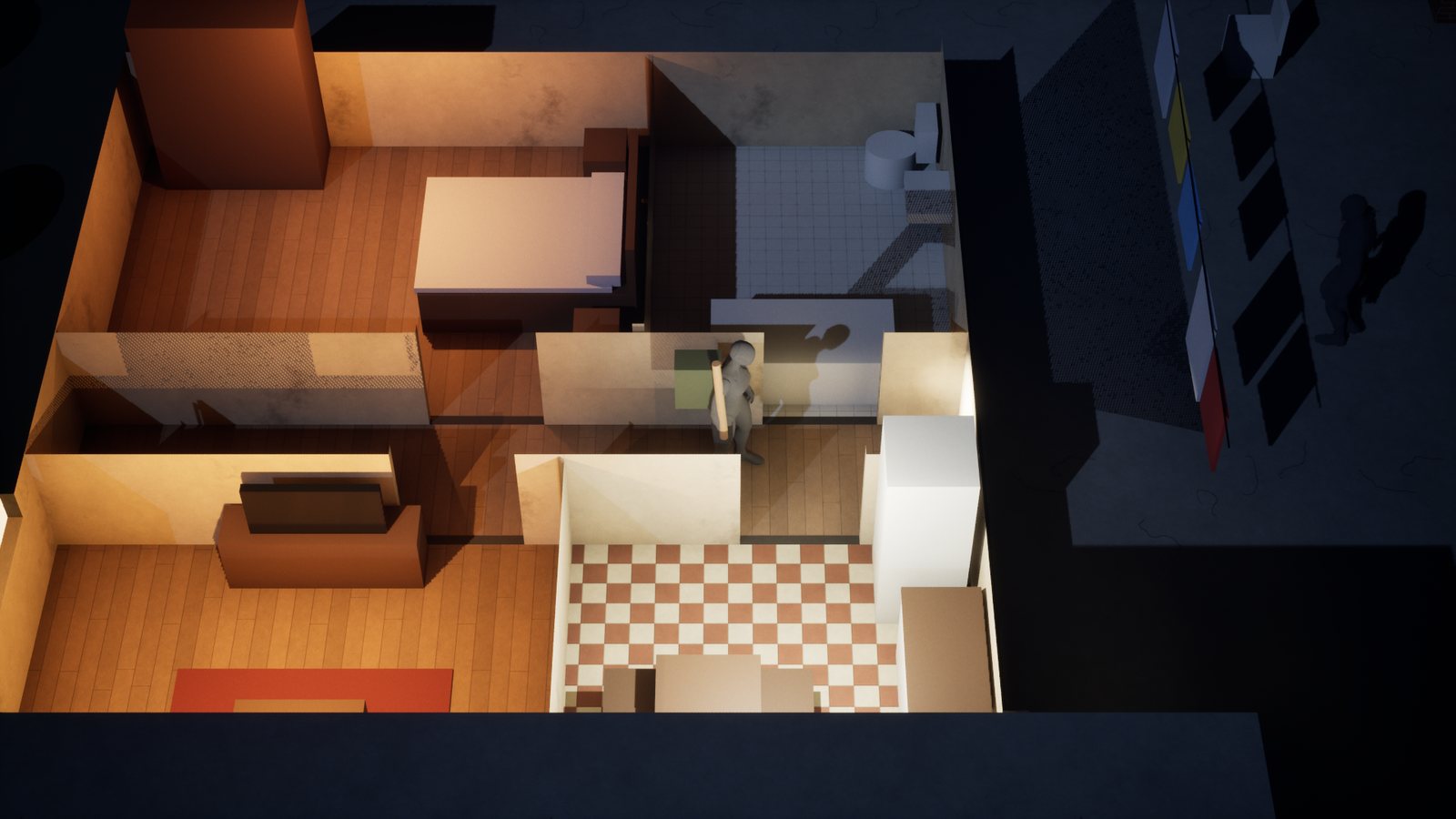
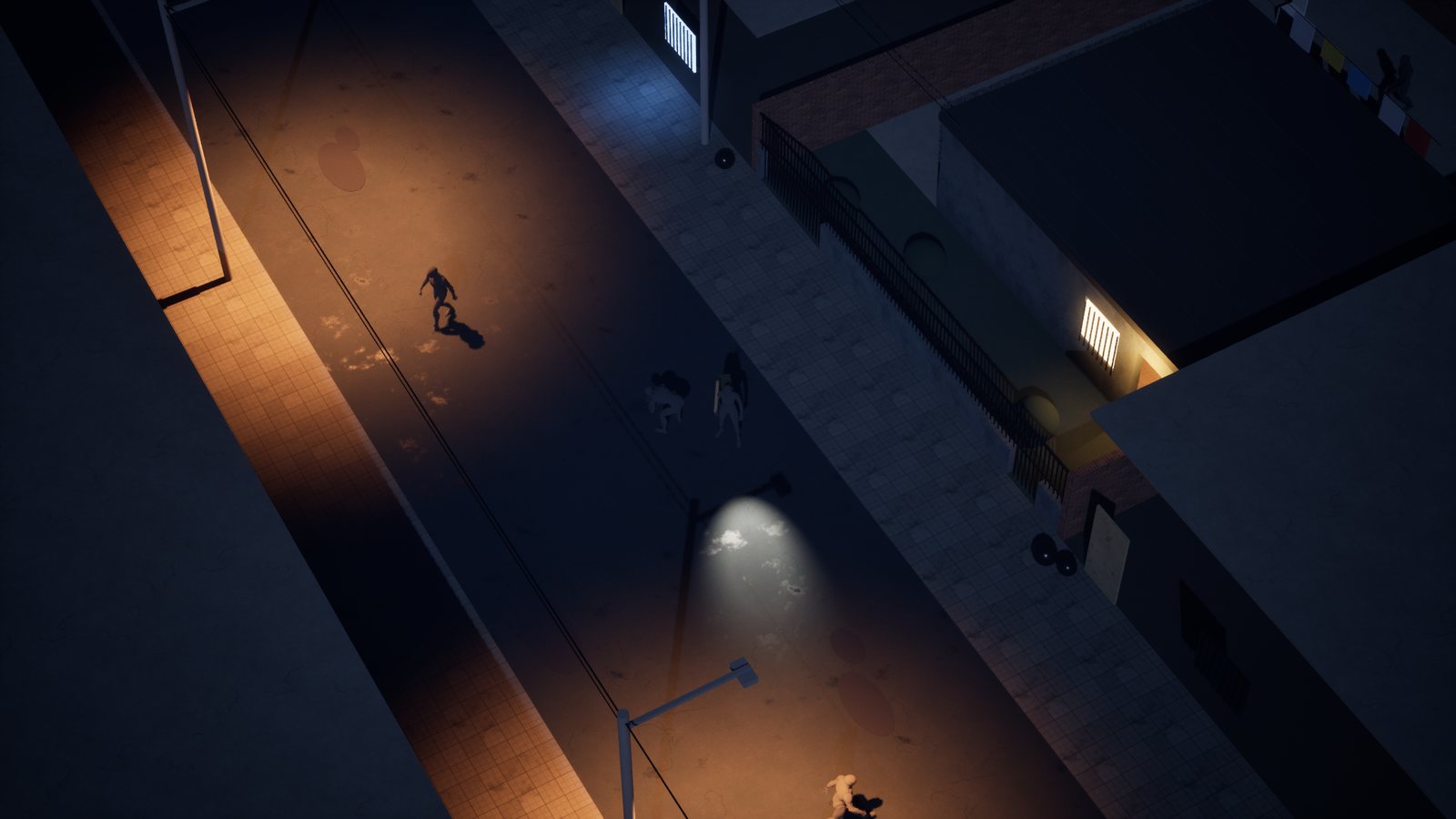
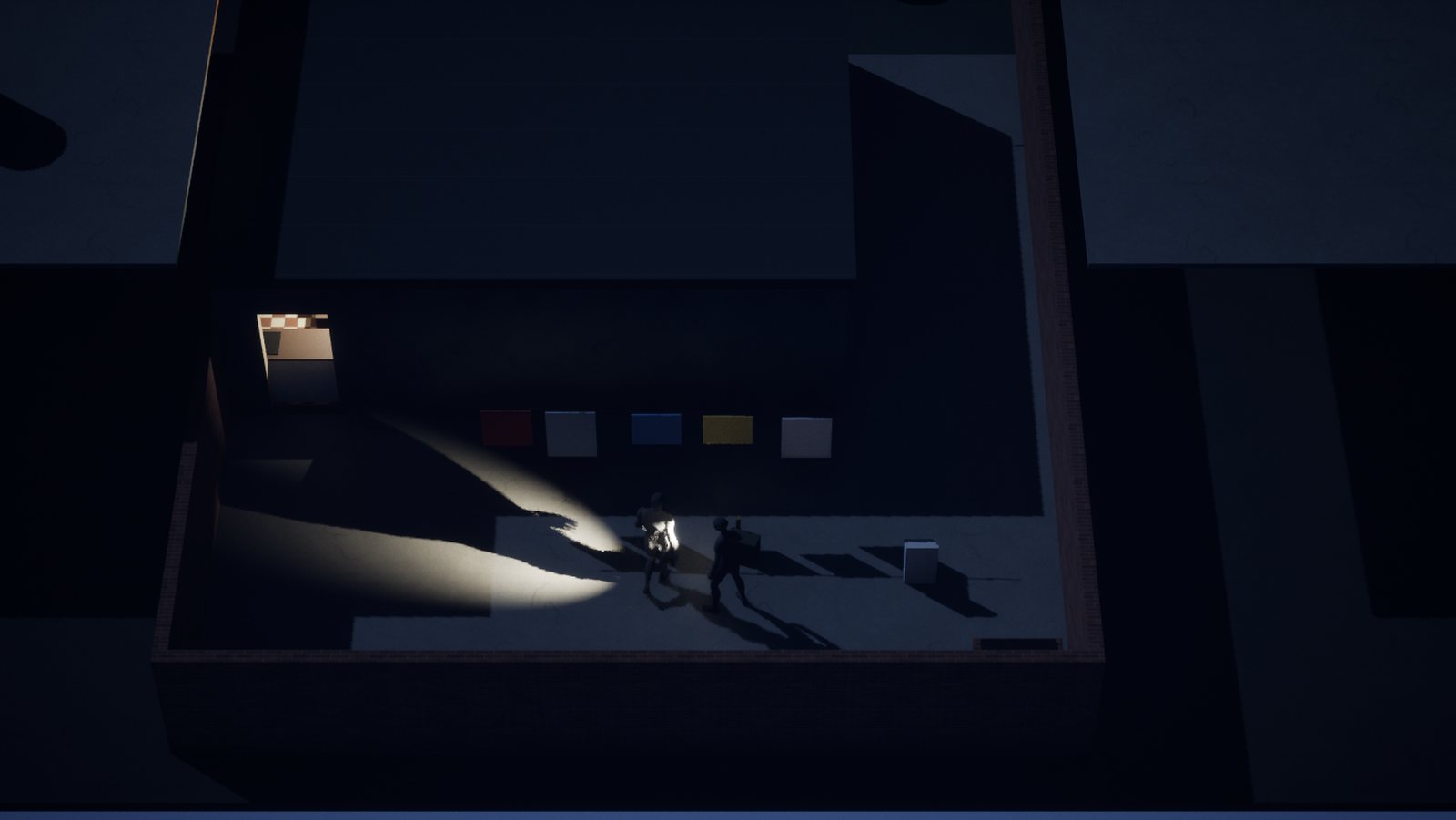
Night in the neighborhood

Scenes staged inside the game engine, using the real level and the in-game camera. The dead, the furniture and the flashlight were placed for the shot: they aren't playable yet.

The house from above with the roof hidden: living room with a couch and rug, bedroom, a kitchen with patterned tiles and the survivor in the living room
Step inside and the roof disappears, revealing the whole house.
The survivor at the front door; the flashlight casts the shadow of the iron gate onto the sidewalk
The flashlight throws the gate's shadow across the sidewalk.
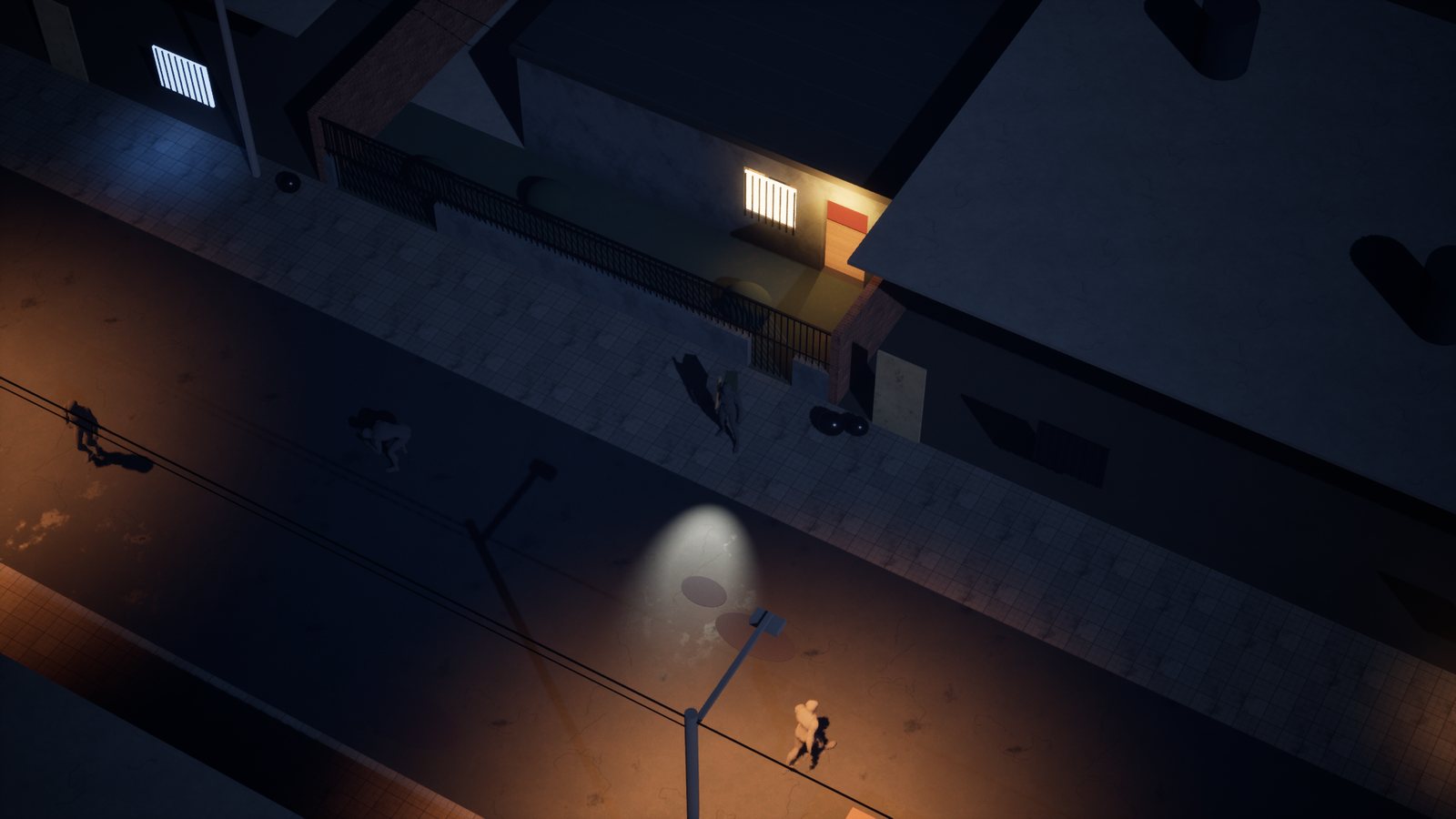
A street at night under a sodium streetlight, with power lines, a walking dead man and a body on the asphalt
The street under the sodium streetlight.
Inside the house from above: the survivor with a backpack and a bat in the hallway, and a dead man in the backyard
Inside, with a backpack and a bat. Out in the backyard, something moves.
Wide view of the block at night with streetlights, sidewalks and neighboring houses
The whole block, neighbors included.
The backyard at night with laundry hanging; the flashlight lights up a dead man in front of the survivor
The backyard, the clothesline and an encounter.
Roadmap

From one street to a world that lasts for years

It's built in layers. Every stage ends with a playable test before moving on to the next one. I don't give dates I can't keep.

Done

Prototype

The bare minimum to test the idea: a character, the camera, one house, looting, one zombie, dying and coming back.

Up next

First neighborhood

A small neighborhood of 5 to 8 buildings with combat, noise, injuries, hunger and thirst, 20 to 50 zombies, saving and the full loop of dying and finding yourself again.

Then

Alpha

A bigger map with more buildings, weather, crafting, barricades, medicine and a story you uncover in the corners of the neighborhood.

Later

Social world

Other survivors, communities, factions and vehicles.

The dream

Generations

Co-op, characters who grow old and generations that follow one another in a world that keeps going for years.

The first two stages are designed in detail. The later ones set the direction of the project and may change based on what I learn from playing.

The prototype, step by step7 of 7 steps done
0

Clean project

Unreal Engine 5 foundation, version control and a test level.

Done
1

I can walk

Movement, stamina, the camera, aiming and the test house.

Done
2

I can loot

Doors, furniture to search and a weight-based inventory.

Done
3

The world reacts

The first zombie: it sees you, hears you and comes looking.

Done
4

I can get hurt

Melee combat, injuries and infection.

Done
5

I can die and come back

A new survivor and a reunion with the previous one.

Done
6

My world survives

Save, quit, come back and find everything the way you left it.

Done
Support development

Chip in

CONURBIA has no publisher and no investors. Every contribution turns into hours of work and the tools the game needs to reach your hands.

Any amount helps. If you can't chip in right now, sharing the project helps a ton too.

Where your support goes

What I still need

  1. 01
    A PC that can keep upRight now the game is being built on a 4 GB graphics card. More memory means faster testing with the whole neighborhood loaded.
  2. 02
    The sound of the neighborhoodFootsteps, doors, breaking glass, dogs, buses in the distance. In a game where noise gives you away, audio is part of the gameplay.
  3. 03
    Characters and zombiesModeling and animation to replace the placeholder shapes.
  4. 04
    A Steam pagePublishing on Steam costs US$100 per game. It's the step that lets you add CONURBIA to your wishlist.
  5. 05
    PlaytestingTest builds so real people can play it, break it and tell me what doesn't work.
No money? You can still help

Other ways to help

  • Share this page with anyone who plays Project Zomboid, 7 Days to Die or anything like them.
  • Follow the devlog and tell me what you'd like to see.
  • If you do sound design, animation or 3D modeling and the project speaks to you, get in touch.
Send the link to someone
WhatsApp X Facebook
Follow the game

Donations are voluntary. They aren't a purchase or a pre-order: they don't include a copy of the game and don't guarantee a release date. What I do guarantee is that you'll see the real progress, including what works and what doesn't.

Pioneers

The ones who were here from the start

The first 50 people who support development are listed here with their Steam profile and a pioneer number that never changes.

47 pioneer spots left3 of 50 taken

If you contributed and want to be listed, send me a link to your Steam profile and the name you donated under. Being listed is optional, and you can ask to be removed at any time.

Devlog

Latest updates

Firearms, and houses with a story

Firearms are in: a .38 revolver and five rifles, each with its own ammo, magazine and sound. The revolver loads one round at a time; the rifles, by swapping the magazine. Shooting gets the job done, but it carries far, it draws half the neighborhood to you, and bullets are scarce. I also started building the houses one by one, by hand. Each one has the family that lived there behind it, and you can tell from the kitchen, the living room, the bathroom and the backyard, from what they left behind and how they left it. Nine so far, including a corner grocery store with its counter, its shelves and the family home in the back. Each one is a model so the rest of the neighborhood, and later the city, can feel just as lived-in without repeating itself.

The first trailer, rain and clothes for the cold

I recorded the first trailer: it's the game as it is, with nothing staged. It's at the top of the page. In the test build it now rains, too: water doesn't come through roofs, puddles form that you can collect from, and streets flood and slow you down. Rainwater has to be boiled or it makes you sick; for that there are campfires made with firewood and newspaper, and gas-bottle stoves in some houses. Clothing matters now: it keeps you warm, protects you from the rain, has pockets, and heavy gear slows you down. I added combat boots, sneakers, helmets, a wool beanie, jeans, a fleece sweater and a big military backpack. And timed actions, like searching furniture or eating, now play an animation that lasts as long as the action does. I'm testing all of this before it goes into the main game.

Houses like a scale model

When you step into a house, the roof disappears and the walls are cut at waist height, like a scale model seen from above. Now the cut follows the floor you're on: climb the stairs and it switches to the upper floor at the right moment, and the stairs always stay visible so they never vanish under your feet. Anything hanging above the cut, like lamps, pictures or air conditioners, is hidden while you're inside. I also got furniture, couches, construction sites, an abandoned playground, a railway and new clothes for the neighbors, which I'll be adding to the neighborhood. All licensed for use in the game.

The world starts getting worse

The game now keeps track of the days, shown in the pause menu, on the map and on the death screen. In the first days there's still light on the streets, but it doesn't last: one night the street lamps start to flicker, and then they go out for good. Later the water is cut off too. Each world rolls its own timing, so you never know exactly when. Night changed everything: in the dark, zombies see less, but if your flashlight is on they spot you from far away. With no street lamps there's only a bit of moonlight, just enough to make out your silhouette and nearby shapes. I also redid the title screen, the options menu and the pause menu.

Four city blocks

The neighborhood is no longer a single street. It's now four blocks, each with its own character: shops and party walls on one side, sheet metal and wood on the other, long narrow houses, houses with gardens, tenements, a corner store, a warehouse and a garage. There are 68 houses and shops, and you can enter every one of them. Each house tells something through what people left behind: a tidy one, one abandoned in a hurry, one someone used as a shelter and one already looted. The upper floor only appears when you get there. There are trees, power lines, old cars parked on every street and a new paper map to find your way.

Flashlight, batteries and visible wounds

The flashlight now drains real batteries and can be worn on your head, and there are candles, a radio and a hand-crank flashlight for when nothing's left. I redid the health panel: a body silhouette marks where you're hurt and each wound has its own card with what it needs, like bandaging, cleaning or disinfecting, plus a first-aid kit to treat yourself. Zombies now have dead skin and dirty, torn clothes, and I optimized them so more can be on screen.

A paper map and a new inventory

This week was all about the interface. I made an old-school map: a printed plan of the neighborhood, with a legend and a compass rose. It starts covered in fog, which clears wherever you walk. You can drag it and zoom with the mouse, and mark places with circles, crosses or notes in five colors. There are papers to pick up around the neighborhood: a list at the corner store, a sign at the bus stop, something left on a fridge. Each one is kept in the notes tab. I rebuilt the inventory from scratch. It now fills the whole screen, with your character shown live and every piece of gear in view, and it runs on the mouse: pick, drag and drop. Pockets, belt and backpack each have their own space, so you decide where everything goes. I dropped the radial menu because it repeated what the quick bar already did: now you set up the 1 to 4 bar yourself, dragging in whatever you want close at hand. I'm still testing all of it, so it may change.

Real faces, blood and the first dead neighbors

It was a big week. The protagonist is no longer a mannequin: he's now a realistic character, built with MetaHuman from a photo of me, with hair, a beard and neighborhood clothes. The zombies came from the same base, but each with a different face, a different body and the skin of the recently dead: pale, with dark circles, purple lips and bloodshot eyes. There are three for now, and there will be more. I added blood, and not a little: every hit splatters the floor and walls, and when a zombie goes down a pool spreads underneath it. When you get hurt, blood splashes the screen; if you're running low, the world loses its color, and if you don't bandage up, you leave a trail of drops. Looting changed too: you open a piece of furniture and a list of what's inside appears, with its weight, so you can take one thing or everything at once. There are eight new weapons, from a knife to a shovel, and every weapon wears out and eventually breaks. This is a game for adults, and the violence is meant to be felt.

The first neighborhood begins

With the prototype wrapped up, I started the Vertical Slice: the first real neighborhood. First I drew the layout of a street corner, with an asphalt street, a dirt alley, five different houses, a corner store and a mechanic's garage, and built it out in gray blocks to test routes and distances. Now the streets and facades have art, and I am building the interiors to loot. After that: nighttime and keeping everything smooth with lots of zombies on screen. The images up top are from this stage: daylight and placeholder art.

My world survives: the prototype is complete

I finished and tested the last step. The game saves on its own every minute and when you quit. Come back and everything is as you left it: your wounds, the doors, what you took from each piece of furniture, the zombies and the bodies of the dead. Quit right after dying and you stay dead: there's no going back. If the save file gets damaged, the game recovers a backup and lets you know. There's also a menu to continue or start a new world, and every survivor has their own name: type one in or get a random one. Zombies also trickle back in over time, so the neighborhood never empties out. I tweaked the controls too: the camera turns with the mouse wheel, and while aiming you walk toward where you're looking. With that, all seven prototype steps are done. Next comes the big one: the first neighborhood.

I can die and come back

I finished and tested step 5, the heart of the game. When your survivor dies, a screen shows the cause and how long you lasted, and you carry on as another character in the same world, far away and empty-handed. Your previous body stays where it fell, with everything it was carrying. Get back in time and you can recover your stuff and make sure it stays down. Take too long and you'll have to face it: I tried, and it killed me. The animations and sounds are still placeholder. Up next is the last prototype step: a world that survives when you quit the game and come back.

Dying and coming back begins

Step 5 is underway, and it's the heart of the game. When your survivor dies, the body stays where it fell, with everything it was carrying, and the world keeps moving. You choose to carry on as another survivor, who starts empty-handed and far from there. Going back for your stuff is up to you, but you'd better not wait too long. It already works in my test copies, and now I'm building the death screen. Once it passes the full test, I'll tell you what the reunion is like.

I can get hurt

I finished and tested step 4. The world has a clock now: one in-game hour lasts 10 real minutes, and your body feels it, with hunger, thirst and fatigue. You can fight back: with a bat in your hand, zombies take hits by body part, and a blow to the head drops them much sooner. But they fight back too. They telegraph the lunge and can hit, scratch or bite you. Wounds bleed and need bandaging, and if you don't clean them they get infected and worsen over the days until they can kill you. Press H to open the health panel and see each wound described in words. The swing animation is still placeholder. Up next: dying and coming back as another survivor.

The world reacts

I finished and tested step 3: there's a zombie on the street now. It sees you within a cone of about 40 feet and hears you based on distance and whatever is in between, because walls and closed doors muffle the noise. It goes from wandering to getting suspicious, investigating, chasing you, losing your trail and searching for you. Shut a door in its face and it bangs on it until it breaks through, which buys you a few seconds to slip out the back without a fight. If it goes a while without seeing or hearing you, it gives up and keeps searching. The sound is still placeholder. Up next: being able to get hurt.

I can loot

I finished and tested step 2. Press F to walk into the house, open doors and search furniture: the first search takes a couple of seconds, can be cancelled, and whatever you searched stays searched. The inventory is weight-based with real-world measures: pockets hold about 4 lb and the backpack adds about 26 lb, so a bat goes in your hand or the backpack. You can also eat, drink and drop things on the floor, and the interface already uses the game's own typeface. The full test for this step passed in a single session. Up next: the first zombie, which sees, hears noise and can force doors open.

Looting begins

Step 2, "I can loot", is underway. Press F to open doors, search furniture and pick items up off the floor. Searching a piece of furniture for the first time takes a moment, makes a little noise and gets interrupted if you move or get hurt. The inventory is weight-based, and the backpack shows on your back. I still need to playtest it properly to tune the values. In development: eating and drinking, dropping things, and a house that remembers what you left behind.

First prototype step, done

Aiming is now complete: hold right-click and your character faces the cursor and slows down, and whatever you're aiming at is highlighted, a zombie in red and an item you can pick up in a warm tone. The cursor turns into a red circle when something is targeted, and it all works inside the house too, through the cut-away walls. With that, "I can walk" passed all of its tests and has been signed off. Up next: doors, furniture to search and a weight-based inventory.

Aiming, a free camera and real shadows

Hold right-click and your character aims toward the cursor, Project Zomboid style: while aiming you walk slower and can't run. The camera now rotates freely with the mouse wheel, and Q and E turn it in 90° steps. When you walk into the house the roof disappears but still casts its shadow, so the interior stays dim and light comes in through doors and windows. The "I can walk" stage passed its full test, 10 out of 10 cases: the only thing left is highlighting whatever you're aiming at.

The neighborhood starts to get some texture

The street and the house are no longer gray blocks: wet asphalt, sidewalk tiles, brick, wood and patterned floor tiles, all in the concept art's color palette. I also settled on how aiming works: with the mouse, facing the cursor, so you can run and fight without fighting the controls.

Running wears you out and makes noise

The character now runs out of breath after about 200 feet of sprinting, and every step can be heard at a different distance. When you walk into the house, the roof disappears so you can see what's going on inside.

First steps

The project's foundation is up and running in Unreal Engine 5, and the character can walk, run and crouch with the in-game camera.

FAQ

Questions I often get

When is it coming out?

There's no date yet. First the full prototype has to exist, then a playable neighborhood. I'd rather let you know when there's something to try than promise a date.

What platform is it for?

PC (Windows).

Will the game be in English?

Yes, it's planned. The game is being written in Spanish first, and an English version is part of the plan. Like everything else, there's no date yet.

If I donate, do I get the game?

No. A donation supports development; it isn't a purchase. If there are ever rewards for supporters, they'll be clearly announced here.

Who's making it?

I am. I'm Brian Barraza, an independent developer from Argentina, and I design, direct and sign off on every part of the game.

What is the conurbano?

It's the huge ring of suburbs around the city of Buenos Aires, home to millions of people: low houses, iron gates, corner stores, buses and power lines everywhere. It's a place I know well and one that almost never shows up in video games. I want it to feel recognizable through its streets and houses, without flags or clichés.

Is the font on this page from the game?

Yes. The Lázaro typeface was drawn for the game, inspired by the hand-painted signs of neighborhood shops.